BUENOS AIRES RESTAURANT REVIEW: Don Julio
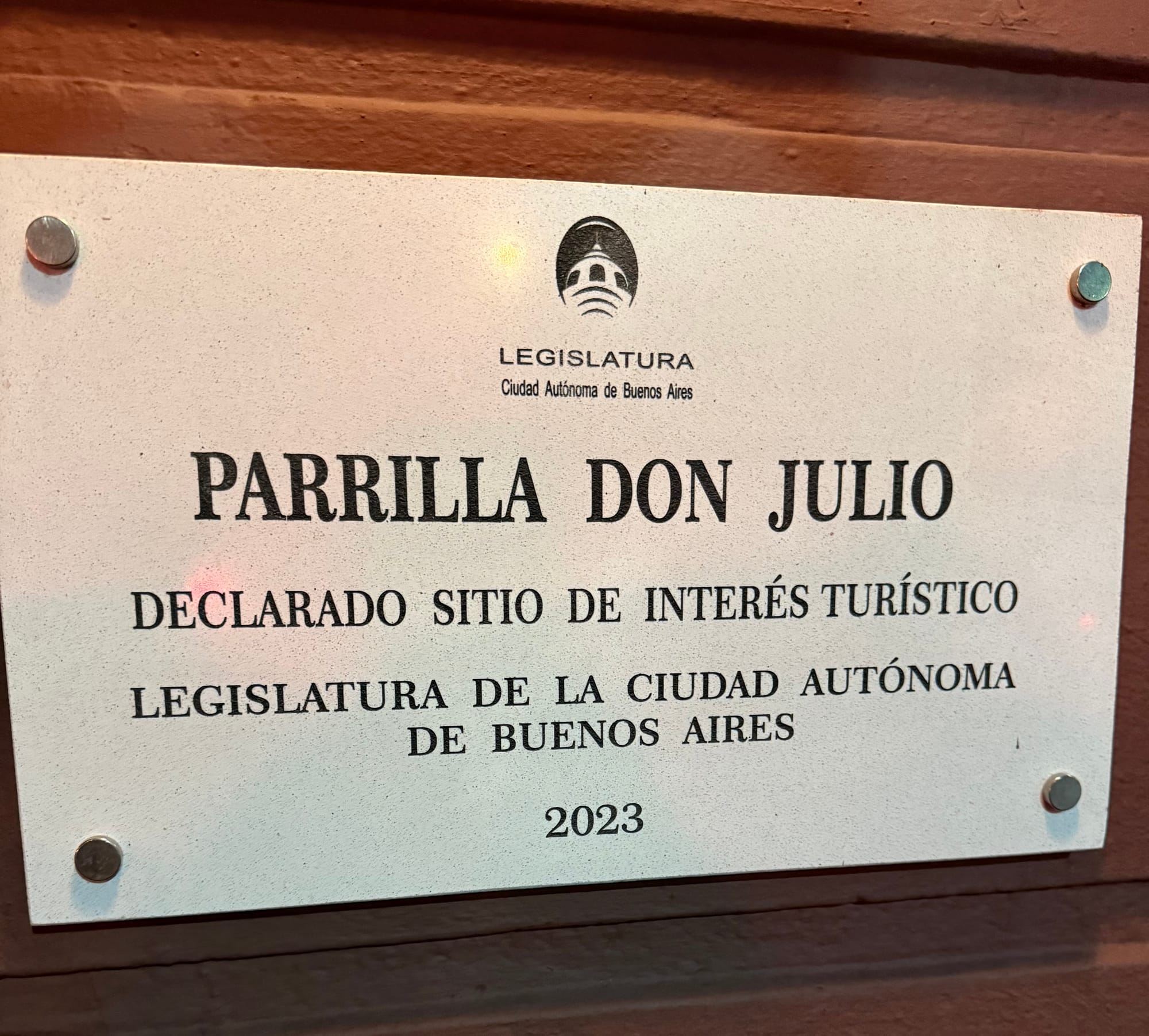
There have been a handful of occasions in my life where I’ve eaten so much that I felt like I might die (who can forget the infamous Salt Lick experience when on the drive back I was certain I’d perforated my intestine?), and things were definitely trending in that direction again with the amount of meat I was served at Don Julio… not to mention I woke up with the meat sweats so bad that I briefly thought I had malaria. But it was worth it. A decades-old institution in the Palermo neighborhood of BA, this is the most renowned parrilla (Argentinian steakhouse) in a city full of them. The list of accolades is almost endless: a Michelin star and green star, #10 on the World’s 50 Best Restaurants list, #1 on the World’s 101 Best Steak Restaurants. Despite this, it’s a fairly casual establishment, so you don’t have to get too fancy.
Dinner service starts at 7 PM, but a line begins forming well before that time. The staff was prepared, handing out glasses of sparkling wine to the eager patrons, as this is surely a daily occurrence. Along with many others, were seated on the long sidewalk patio, but despite the chilly 8 degree Celsius evening, it felt comfortable due to the myriad of heaters (unfortunately this lighting led to some truly atrocious orange-hued photos, as you’ll see below). The menu, as one would expect, is heavily meat-centric, though there are a handful of appetizers, grilled vegetables, and sides. A la carte is an option (and probably the better choice, to be honest), but our waiter very strongly encouraged the tasting menu for first-timers, assuring us that the portions were smaller and even the “largo” (long) version would be easy to finish. This was a lie.
Things started out rather innocuously, with “cecina de novillo”, a slice of dry-cured beef, and “libritos”, small rolls of folded bread made to look like a little book, as the name would imply. The cecinas were nicely salted with a hint of smoke, somewhat akin to Iberico ham, and one slice per person was a totally appropriate amount. The libritos were fun and quite interesting texturally, with a crispy outside and a soft buttery interior. I believe these are cooked in beef fat, so the steak notes persist throughout the menu.
Course two was the famous “salchica parrillera”, or spiral sausage. Similar to Argentine chorizo but served in a thin coiled shape, the meat contains herbs and spices that impart a nutty, smoky flavor, as well a great snap when biting through the casing. This was one of the dishes I absolutely had to try, so I was very happy it was on the tasting menu.
Next were two dishes I would never order under normal circumstances, but I’m glad I was able to try. “Mollejas”, or sweetbreads, come from the pancreas of the cow. I’ve never understood where the name comes from, and apparently neither does anyone else, as the etymology is unclear, if Wikipedia is to be trusted. The offal reminded me of a fatty pork, soft and juicy but without a ton of flavor. These were paired with roasted beetroot (the Spanish name for this dish is too long to transpose), thinly sliced carpaccio-style and topped with blood orange supremes. I liked how the juicy acidity of the citrus mellowed the earthy beets, but I won’t be ordering either of these items when I return.
Now we get to the main attractions. “Entraña” is the Spanish term for skirt streak, the thin cut from the diaphragm of the cow. This isn’t the most tender type of beef you’ll find, but the flavor here was incredible. The meats at Don Julio are cooked over an open fire grill with wood coals, which gives a tremendous smoky juicy finish. For some reason this one isn’t listed on the a la carte menu, but if you’re going that route I’d suggest asking if you can get it, because it was a world-class steak, cooked to a spectacular medium rare. It was accompanied by a green salad that was nice but nothing special.
At this point I was already getting pretty satiated, as you might imagine, but there was still another steak course to come. For the center-cut ribeye (“Centro de ojo de bife), we expected maybe one small steak split between the two of us, but no, one huge hunk of meat per person arrived at the table. This cut of course has gorgeous marbling, and that gave an intense fatty flavor, still with the smokiness from the grill. However, it was slightly undercooked, as the center was a quite red rare, as opposed to the medium rare we specified (and was recommended by the chef). I made a valiant effort, but could barely manage half of the slab, and even less of the aged mashed potatoes that came along side.
I considered skipping the dessert course altogether, but our server wouldn’t allow it. “Helado de quinotos al whisky” was a small scoop of confit kumquat ice cream with whisky, that I valiantly ate a few bites of. It was tasty, sweet with a little bit of pop from the brown wine.
And that was it. They rolled me out of there, bursting at the seams, but happy. While they may need to reconsider some portion sizes, the food here was incredible, especially the steaks, and it’s a must-visit if you’re in this part of the world. Next time I’ll go a la carte and explore some of the other cuts, and try not to explode.
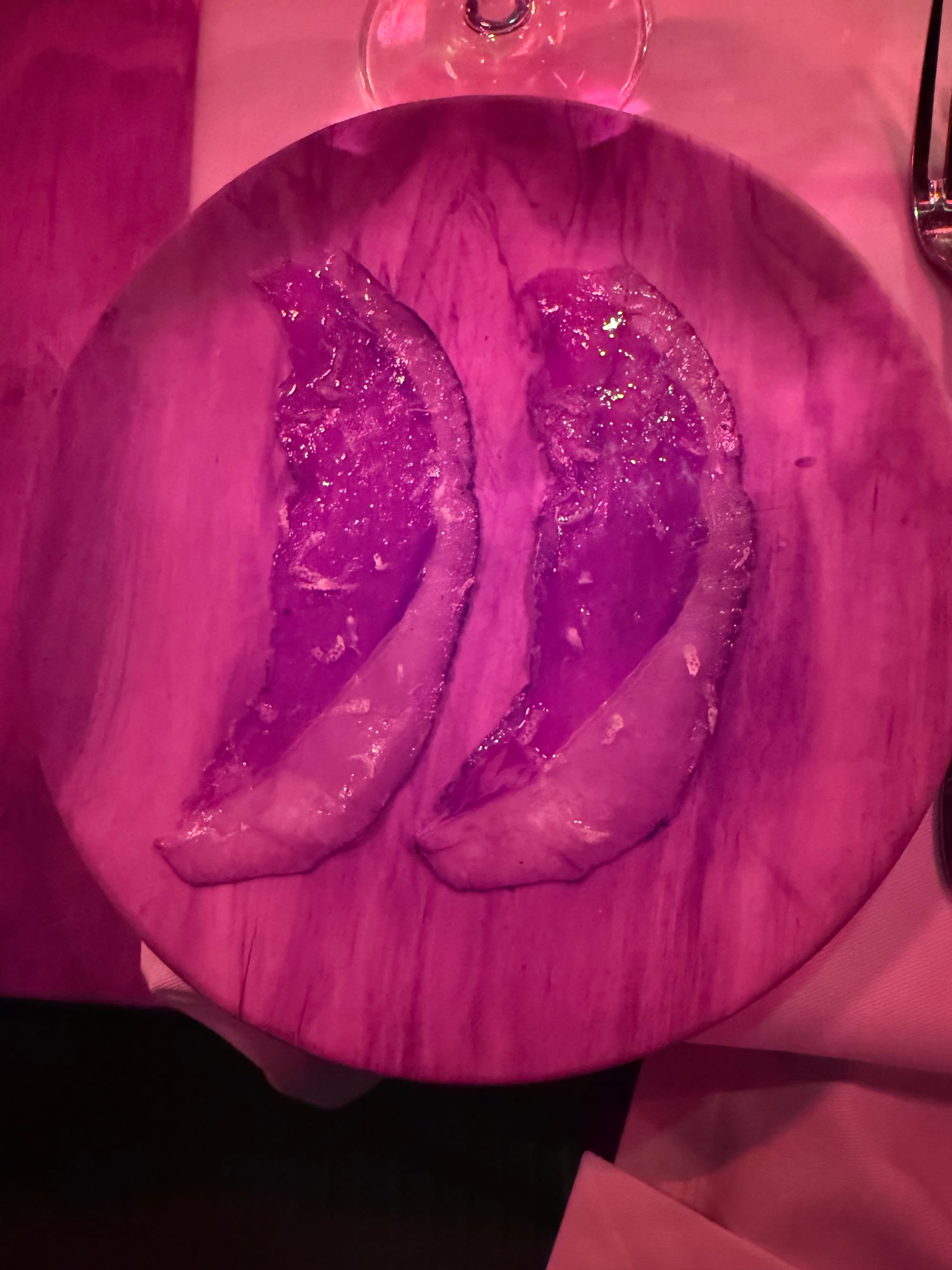
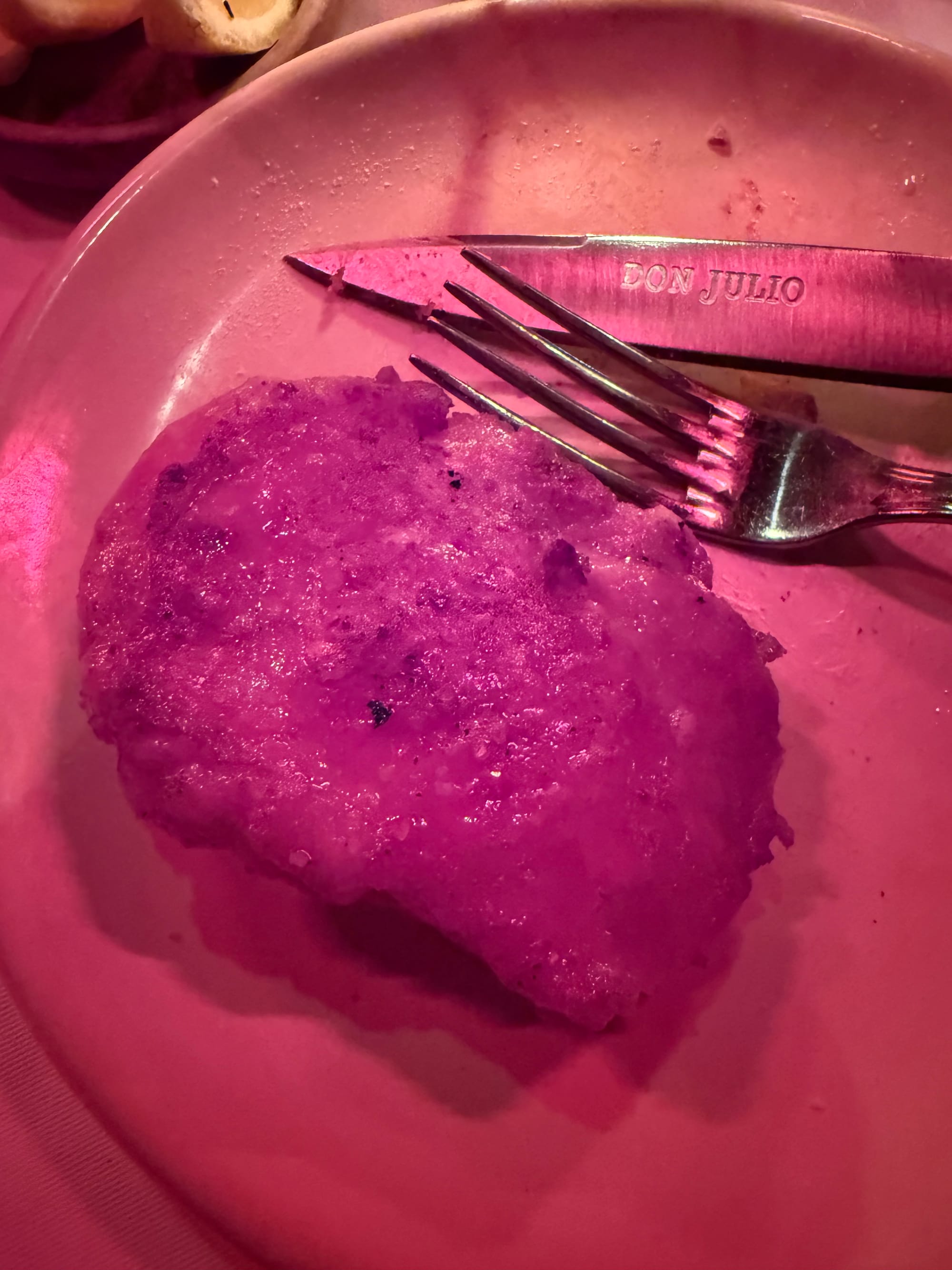
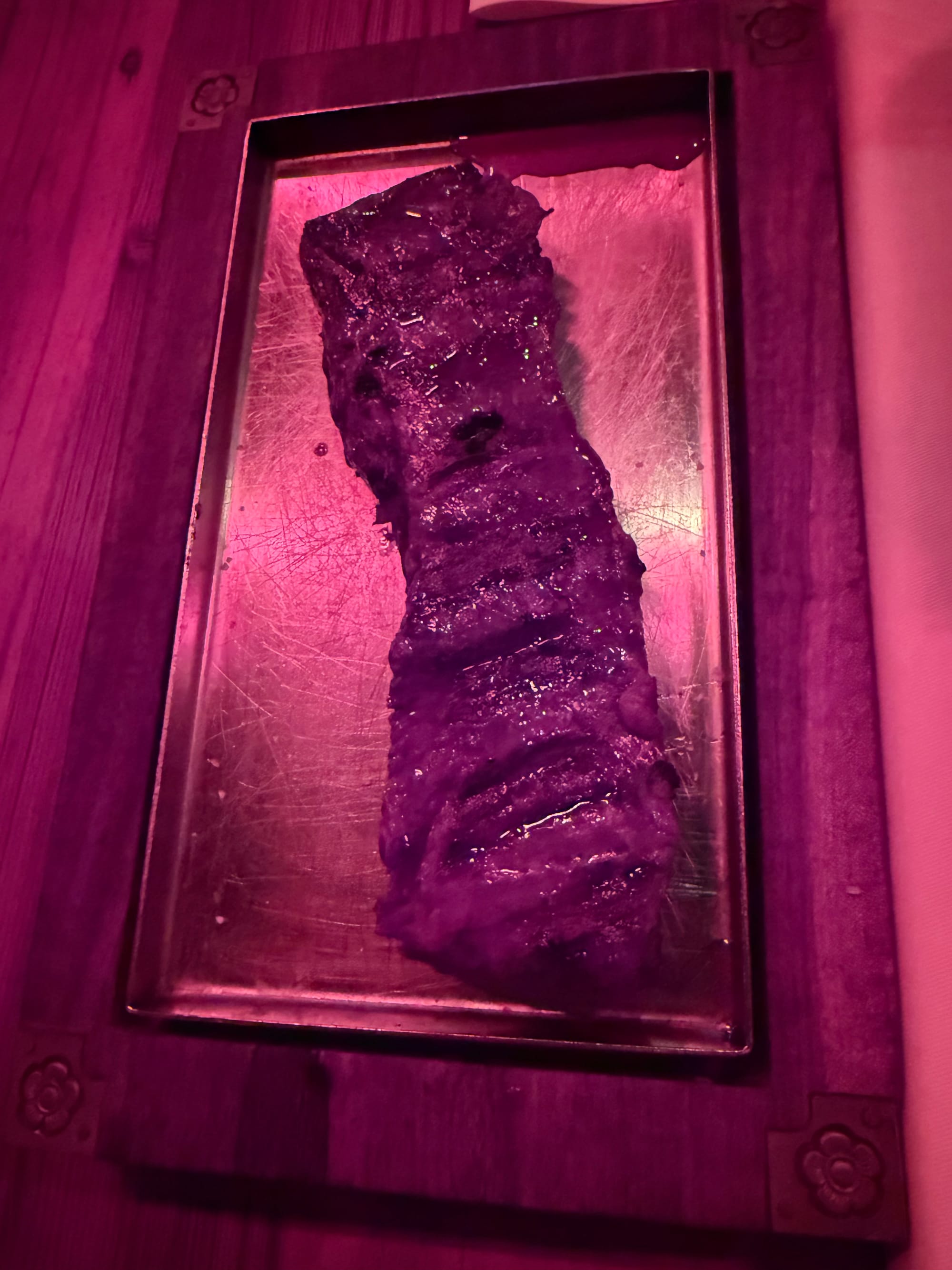
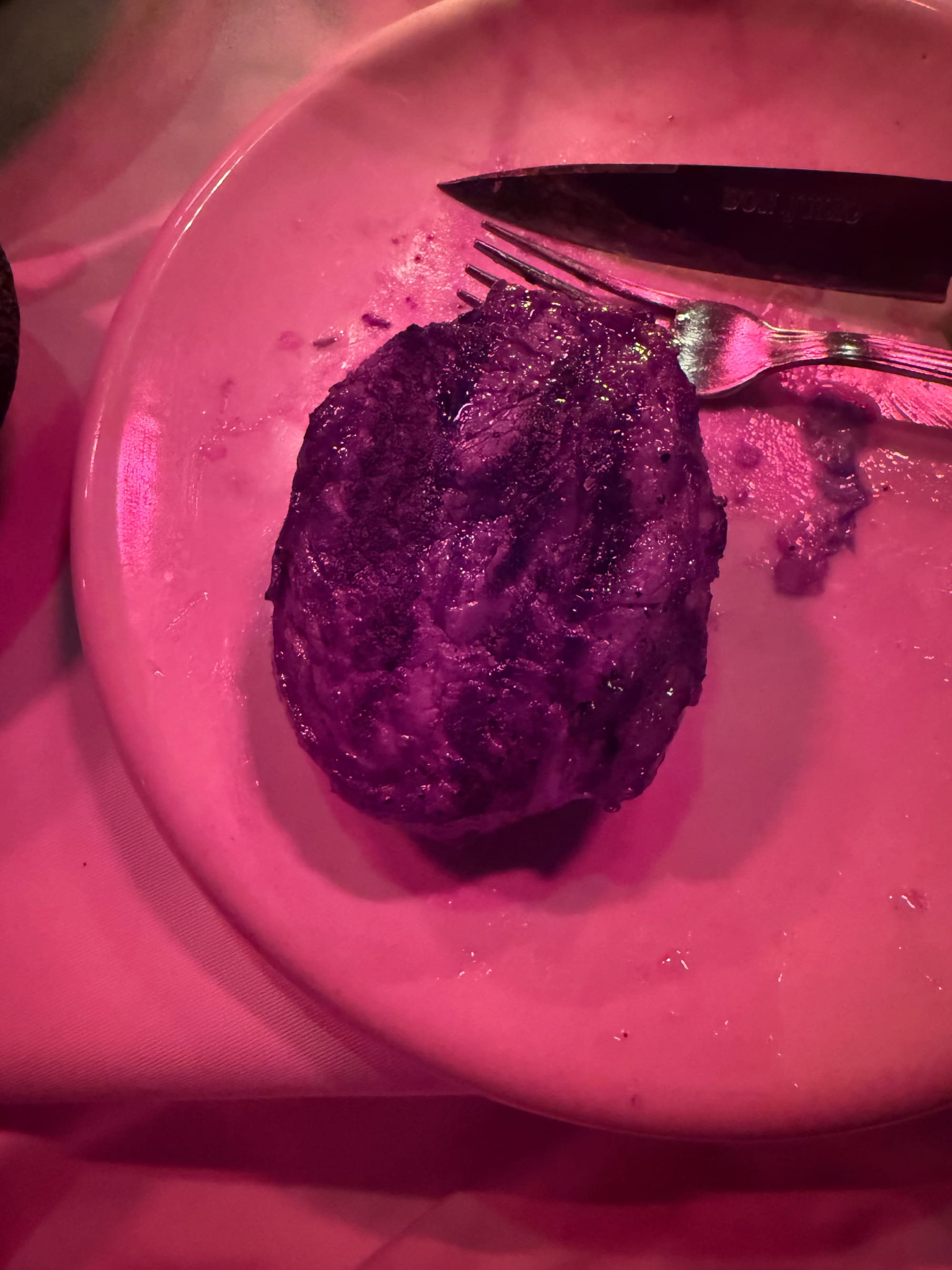
Some terrible pics of some great food
NEXT UP: Exploring Buenos Aires’ incredible cocktail bar scene