LIMA RESTAURANT REVIEW: Maido (!!!)
It's estimated that there are over 23 million restaurants in the world, so an objective ranking of the finest is obviously impossible. But someone has to try, and fortunately the good folks at The World's 50 Best compile a register each year. Even though there's surely a tremendous amount of subjectivity (and probably payola) involved, this list, and its regional offshoots, has never steered me wrong in the past, especially in cities that don't have an Eater site or a Michelin guide. Maido has been consistently hanging around the top 15 for the past decade, and was actually at #5 when I originally booked this trip. But a few months ago when the 2025 edition came out, I was excited to learn that it had snagged the coveted #1 spot - the best restaurant in the world. Did that create unrealistic expectations? Of course it did, nothing could ever live up to that amount of hype. But it still was a tremendous dinner experience.
Maido is located in the Miraflores neighborhood of Lima, home to many of the notable parks and hotels. Demand is obviously off the charts, so I was only able to secure a 4:30 PM reservation, though after an early morning five-hour flight from a city two time zones ahead, it actually worked out kind of perfectly. Ascending up the stairs from the ground-level hostess stand brings you to the second-floor dining room with about twelve tables, plus an open kitchen in one corner and the bar opposite. Hundreds of long ropes hang from the soaring ceiling in an interesting bit of decor, though all I wanted to do was try to jump to grab one and climb up (as if there was any chance that I possibly had the upper body strength to do such a thing). "Maido" means something along the lines of "welcome back" in Japanese, apparently said by Osaka restauranteurs to greet their regulars. Here you'll hear the staff shout it out in unison whenever customers (returning or otherwise) scale the staircase. Apparently this is a #1-in-the-world ranked touch, as Handshake Speakeasy does something similar.
This is the undisputed champion of Nikkei cuisine, which is a fusion of Japanese techniques with Peruvian ingredients (there is a very large Japanese population in the country). One can either select the Maido Experience, a twelve-course tasting menu which changes frequently, or order a la carte. Apparently the latter option is a lot more sushi-forward, as some friends who dined a few days prior had quite a different experience than we did. I will sheepishly admit I didn't know that 60% of Peru is in the Amazon, which gives chefs here so many unique ingredients that you just can't get elsewhere. That led to one of the most interesting meals of my life. Let's go course by course...
Course 1: Madre De Dios
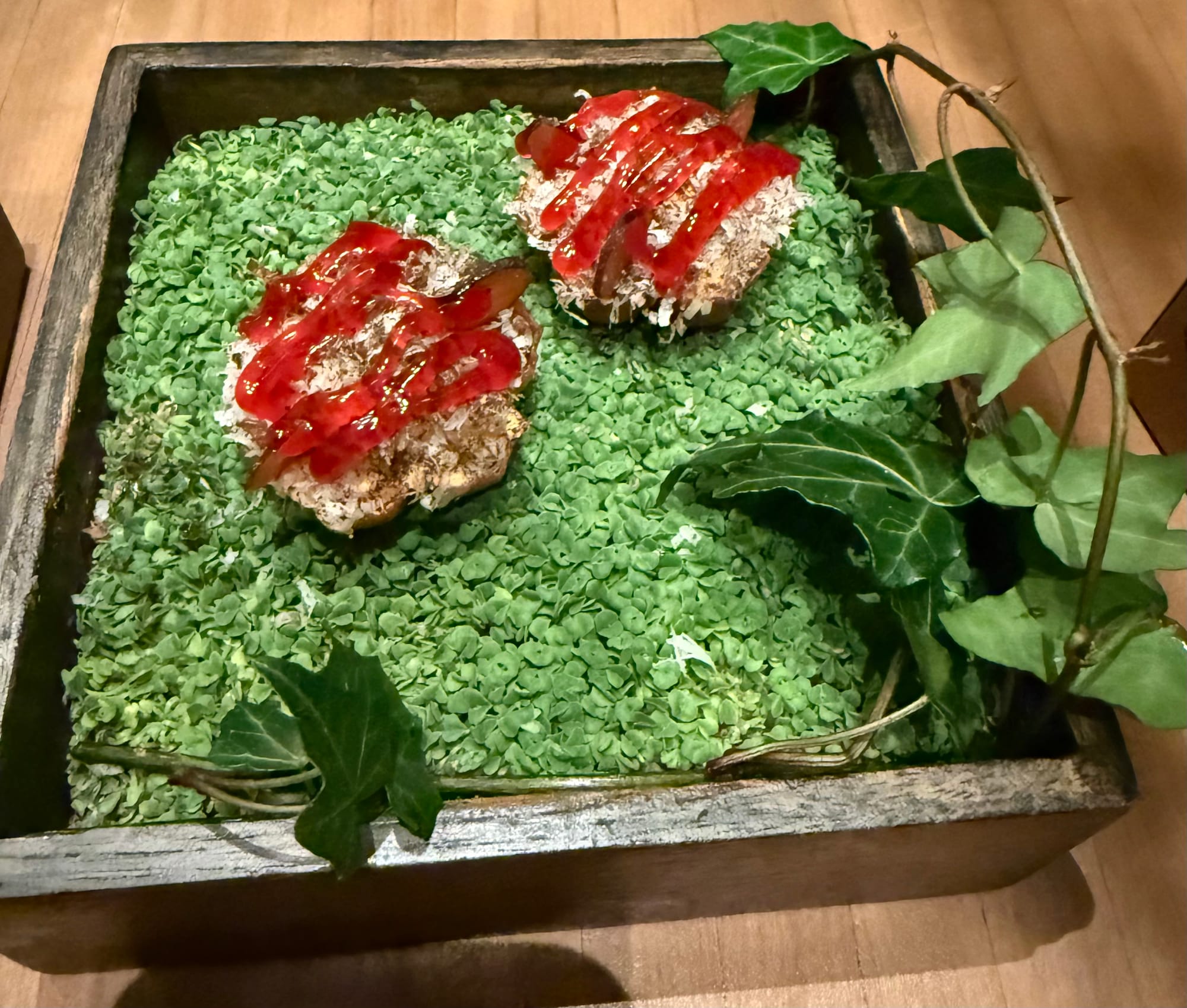
Many of the dishes here are named after the area where the ingredients are found, such as this one, a region of southeast Peru in the Amazon. The first few courses were one-bite handheld items. These were little tartlets with chorizo, Bahuaja nuts (what they call Brazil nuts in Peru), and yacón, a tuber similar to a sunchoke. They were deliciously salty and nutty, topped with a sweet lemony jelly, and plated on a bed of tiny green leafs. A small bite, but tons of flavor. This was paired with...
Course 2: Butifarra
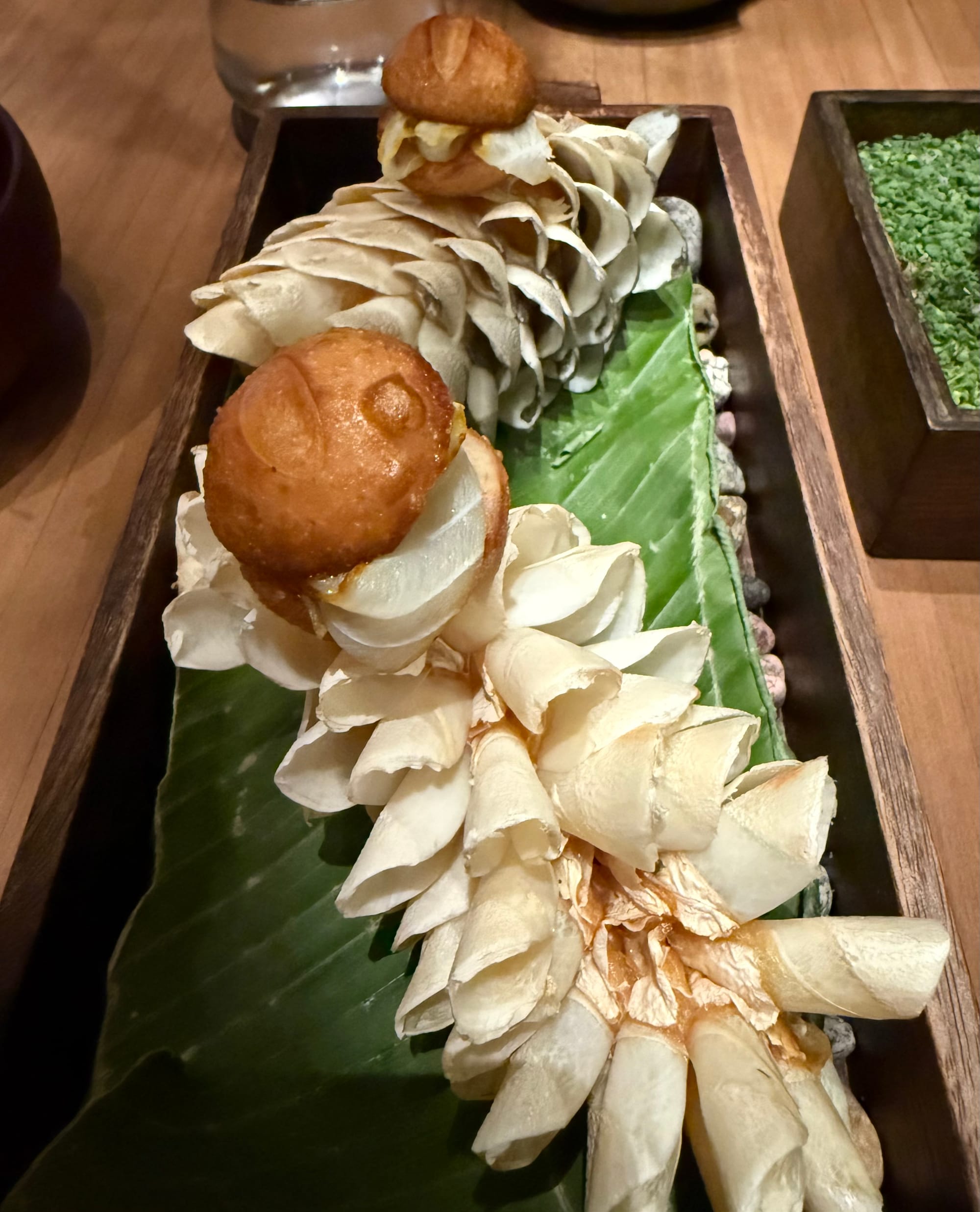
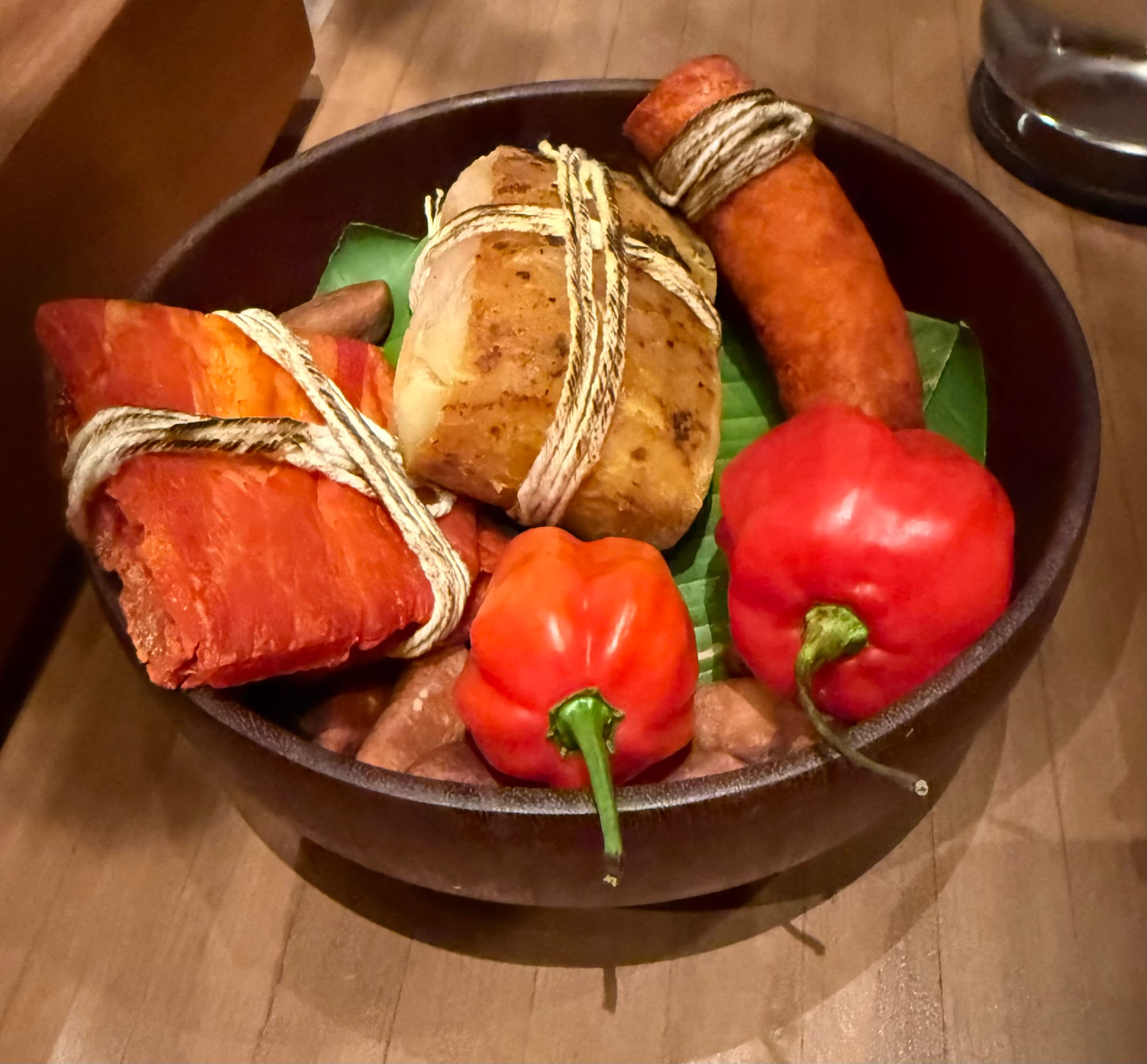
Butifarra is a Peruvian street food pork sandwich, but here the "ham" is a smoked paiche (a very large Amazonian freshwater fish), with an ají dulce emulsion (a sweet local pepper), honey, and karashi (Japanese mustard). This was a tremendous bite, smoky and pungent balanced by the sweetness from the honey. It was served atop the dried paiche scales, which gives you an idea of how big this fish is; another restaurant I visited actually used these scales to create a large art piece covering an entire wall. One cool thing that they do here was to bring out some of the unprepared ingredients used in some of the dishes... below you can see the pepper, fish, chorizo, and yacón from the first two courses:
Course 3: Huarmey - Casma
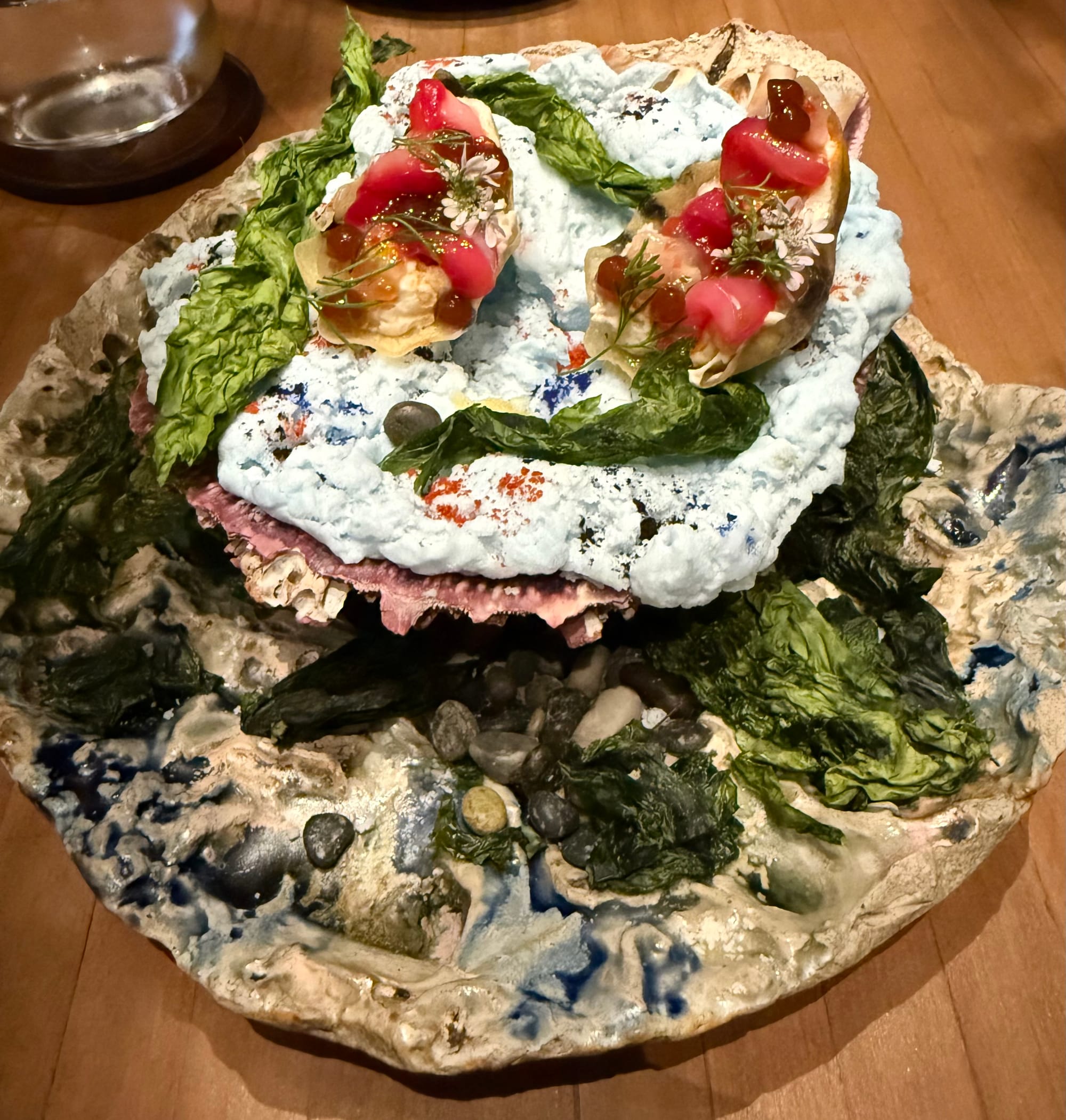
The presentation of the food here is absolutely stunning, and this one might have been the most spectacular of all. In fact I was so blown away that I didn't entirely follow the waiter's description of the dish, but it does have scallops (from the coastal town of Huarmey), razor clams and red clam emulsion, and ponzu tapioca atop a shell-shaped cracker with squid ink. This was a very shellfish-forward course with citrus and umami, and the dehydrated greens and dried blueish sugar base reminded me of some sort of giant phantasmagoric mollusk shell.
Course 4: Cebiche
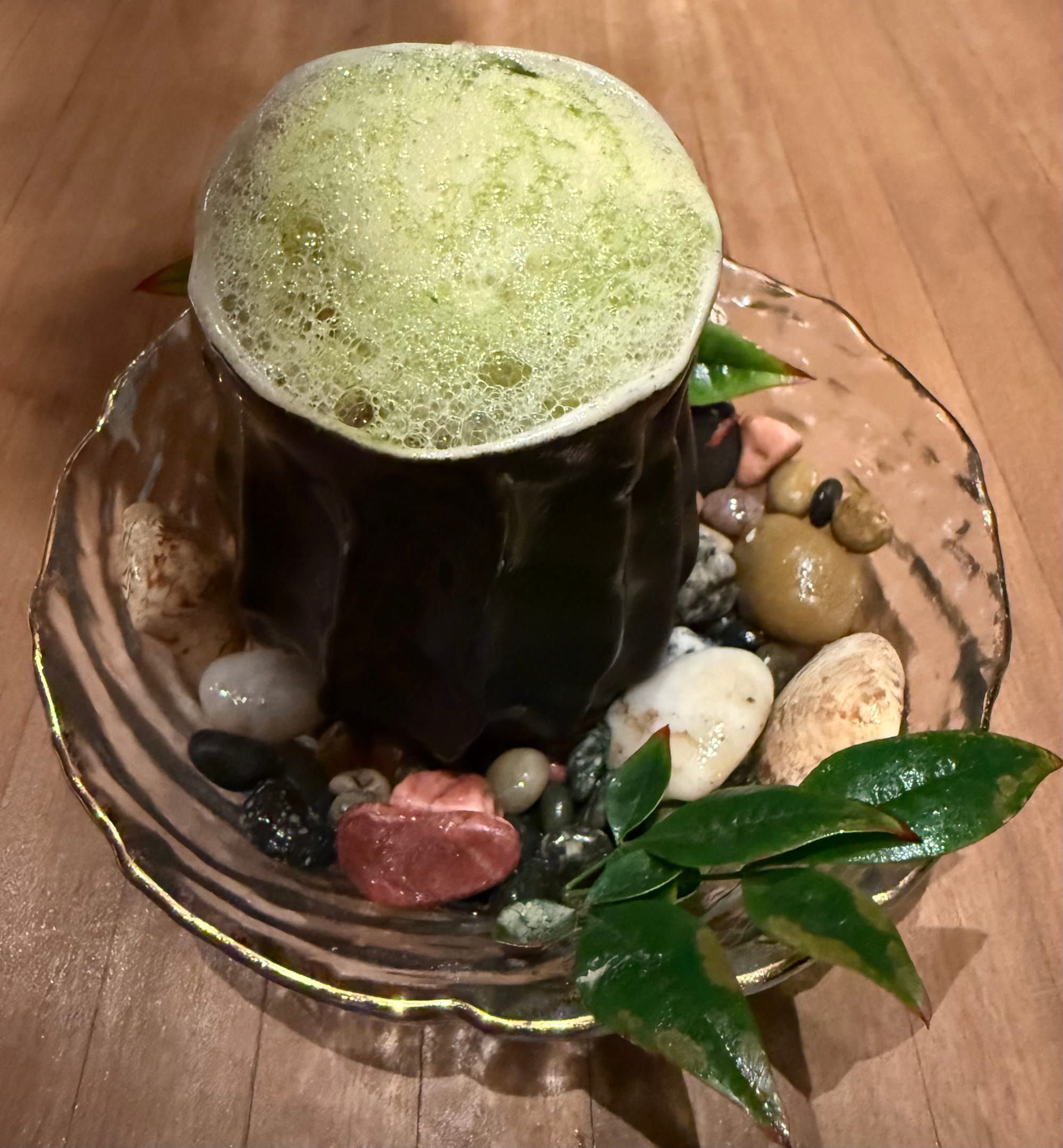
Cebiche/ceviche is the national dish of Peru, and you'll find it absolutely everywhere in many different forms (I even had one where coconut replaced the fish). Apparently only tourists eat it after 5 PM, though, as the fishermen come in early in the morning with their bounty, and the fish is at its freshest at lunchtime. I think Maido is an exception, though, and even if not, we probably ate this just moments before that cutoff. The catch of the day was "fortuna", also known as a darkfin amberjack, which was layered with squid, snails, pistachios, leche de tigre, and topped with a pistachio foam. This was definitely a unique preparation, as the sweet and earthy nuts created quite a contrast to the citrusy leche de tigre and the various seafoods, and a nice crunch for texture as well. Definitely not your mama's ceviche (even if your mama is Peruvian).
Course 5: Sarza Arequipeña
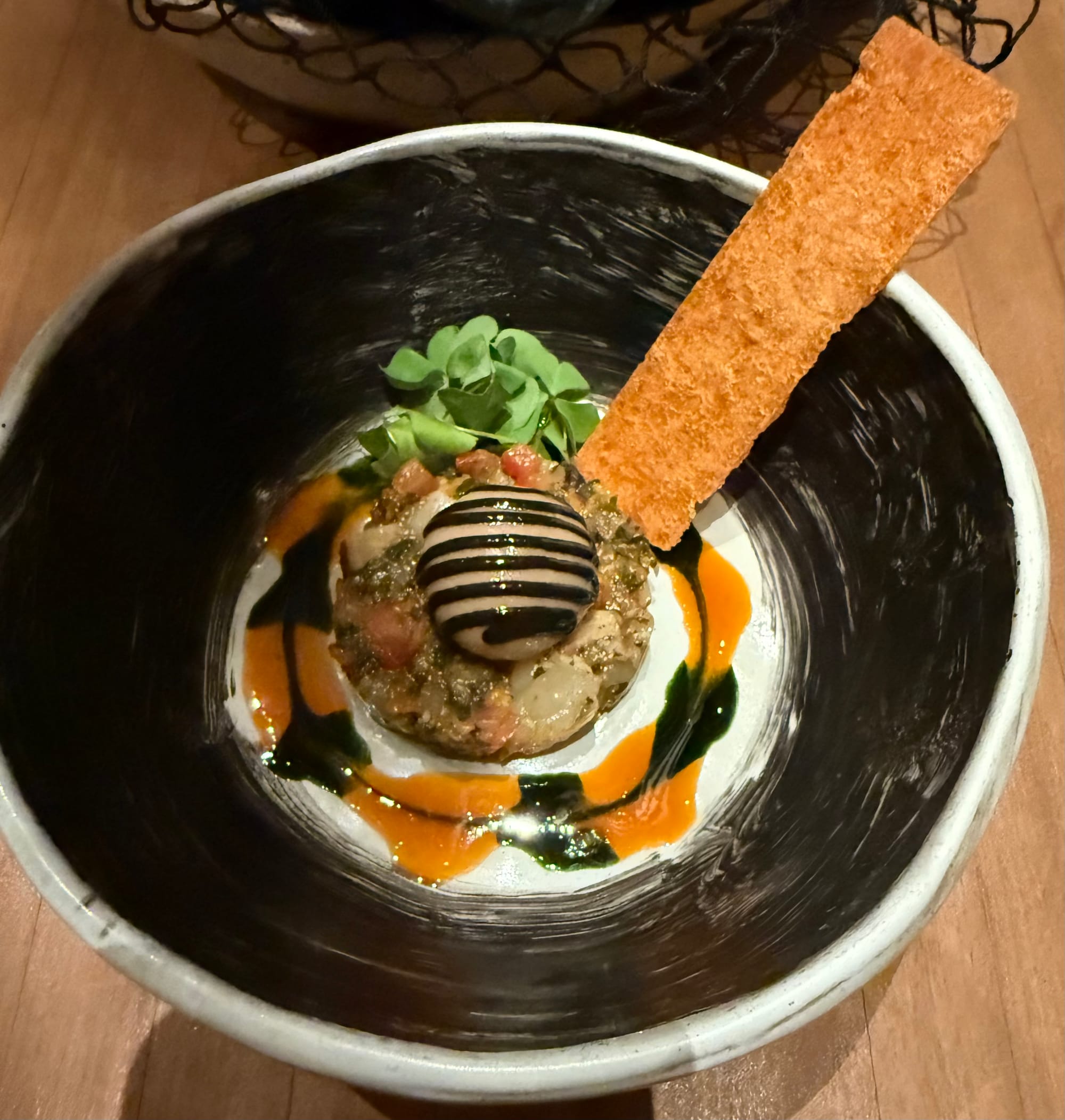
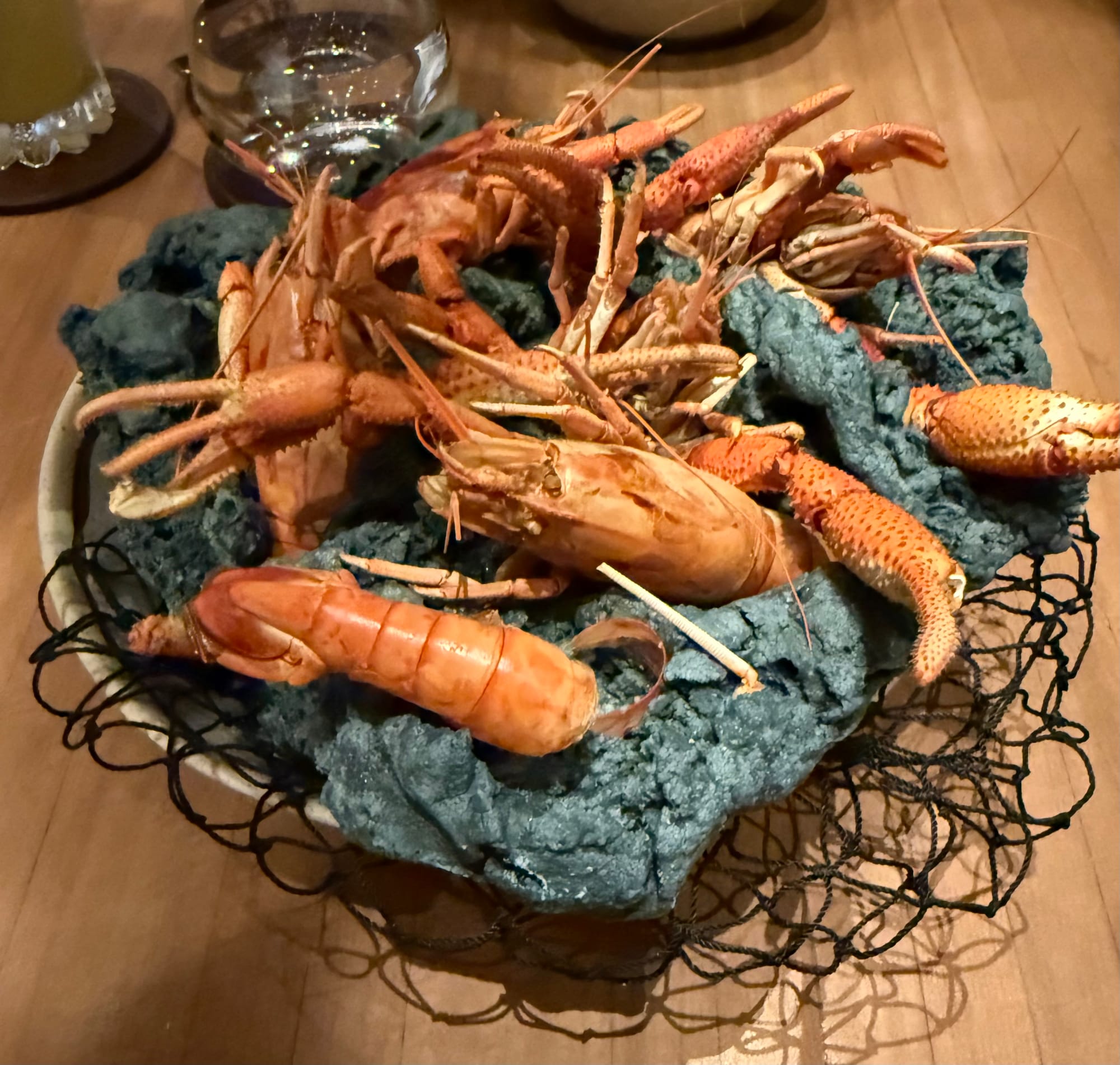
The star of this gorgeous dish were river prawns from Ocoña in Southern Peru (Arequipeña refers to cuisine from neighboring Arequipa). This course was a play on a crudo or tartare, with the raw prawns mixed with limpets and topped with a shrimp bisque "egg yolk", surrounded by alternating huacatay (Peruvian black mint) and chicha (a beverage made from corn) purees. Any tartare needs something crispy upon which to pile the protein, and in this case a wonderful crustacean cracker served that purpose. Another beautifully plated dish, and the briny flavor of the prawns really shined through, accentuated by the minty and sweet drizzles around the perimeter. Please enjoy a photo of the whole prawns below:
Course 6: Huaral - Virú - Ayacucho
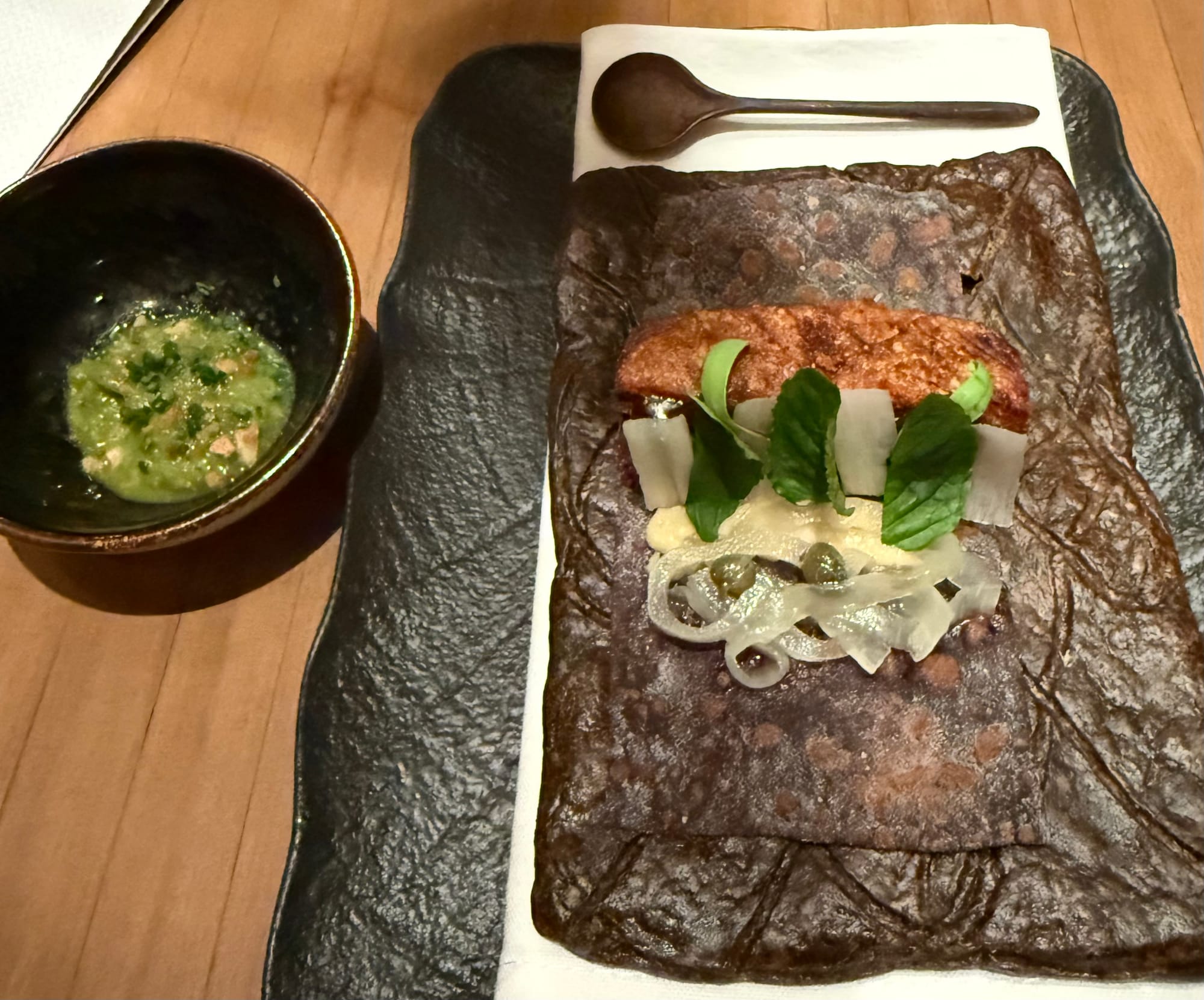
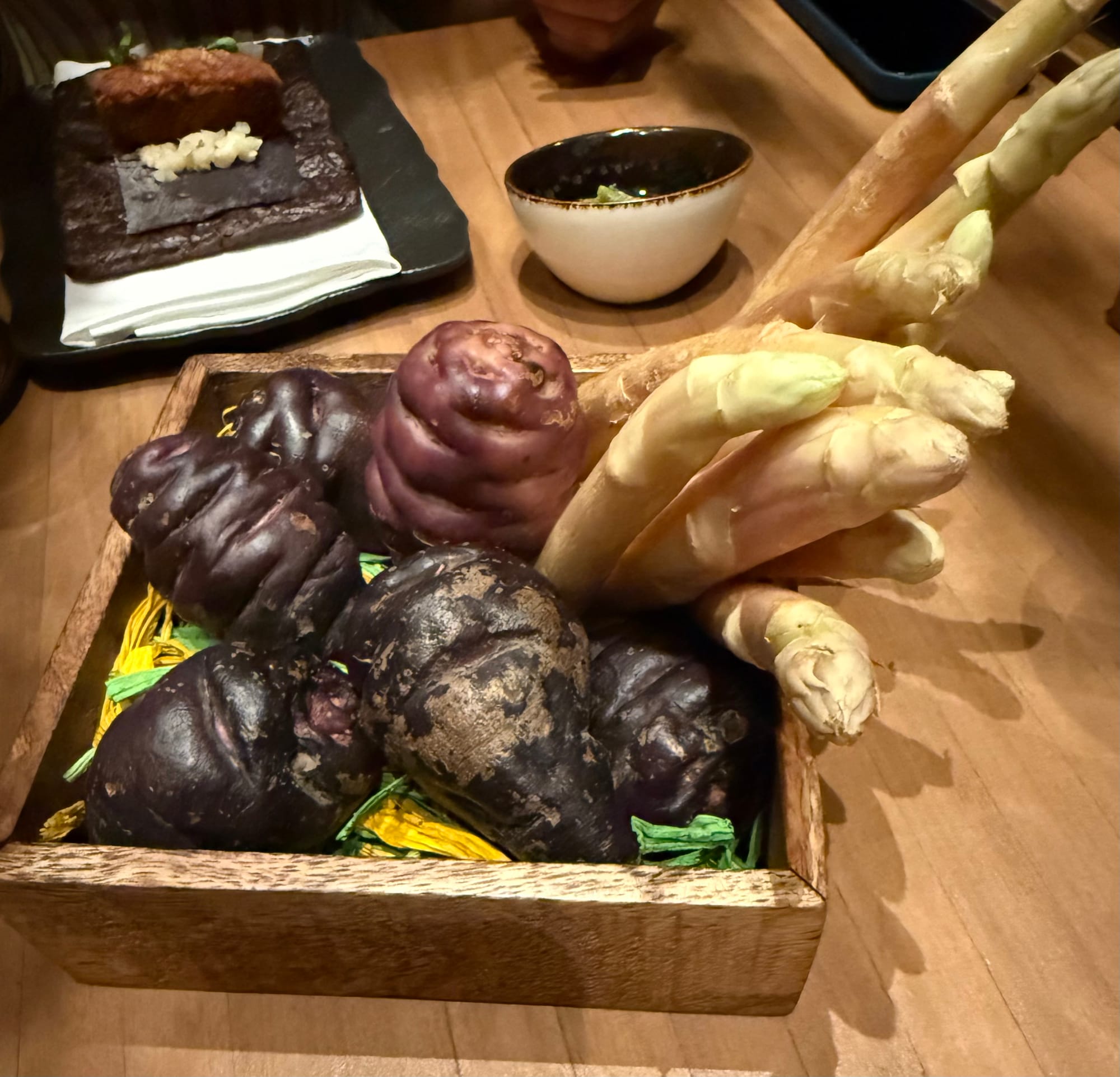
Three more cities represented here, in different regions of Peru. I'm glad they scoured the nation to find these ingredients, because this was the single best thing I ate on my entire South American adventure. A suckling pig (from Huaral, north of Lima) terrine was placed atop "mashua paper" (an Andean tuber from Ayacucho) alongside white asparagus (one of Peru's biggest crops) from Virú and pickled onions. This was essentially a taco, but wonderfully complex with so many synergistic flavors. The crispy pork was incredibly tender, the onions acidic, the asparagus bitter, the mashua almost potato-like (if you're wondering what a raw mashua looks like, see the photo after this paragraph), and it was served with a gloriously spicy salsa verde made with rocoto, a small fiery chili from Arequipa. For some reason most food in Brazil and Argentina had very little heat, so it was nice to kick things up a few notches here. I got to enjoy one and a half of these, as my dining companion was already starting to feel full, but honestly I could have eaten ten, they were that good.
Course 7: Sushi
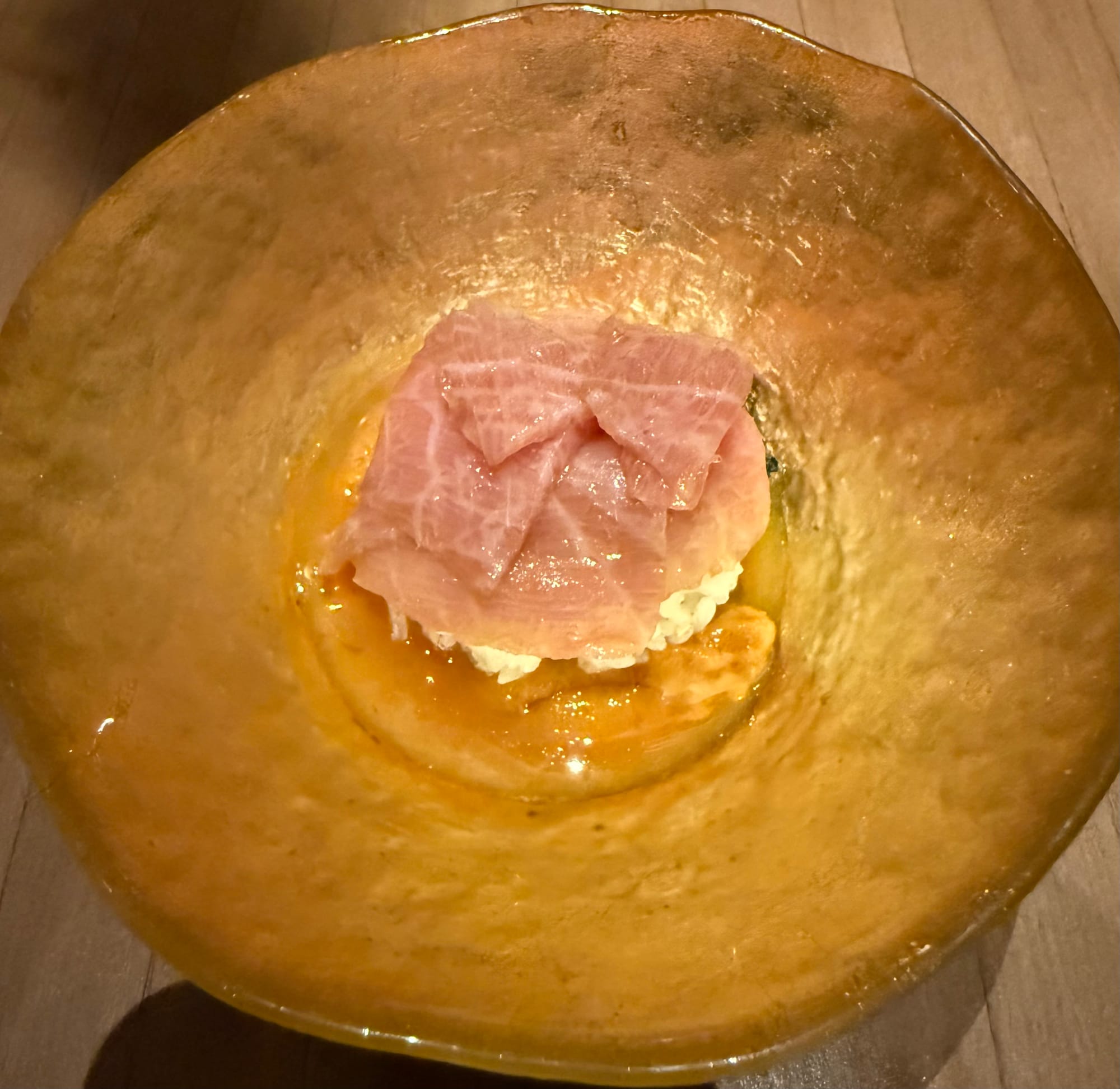
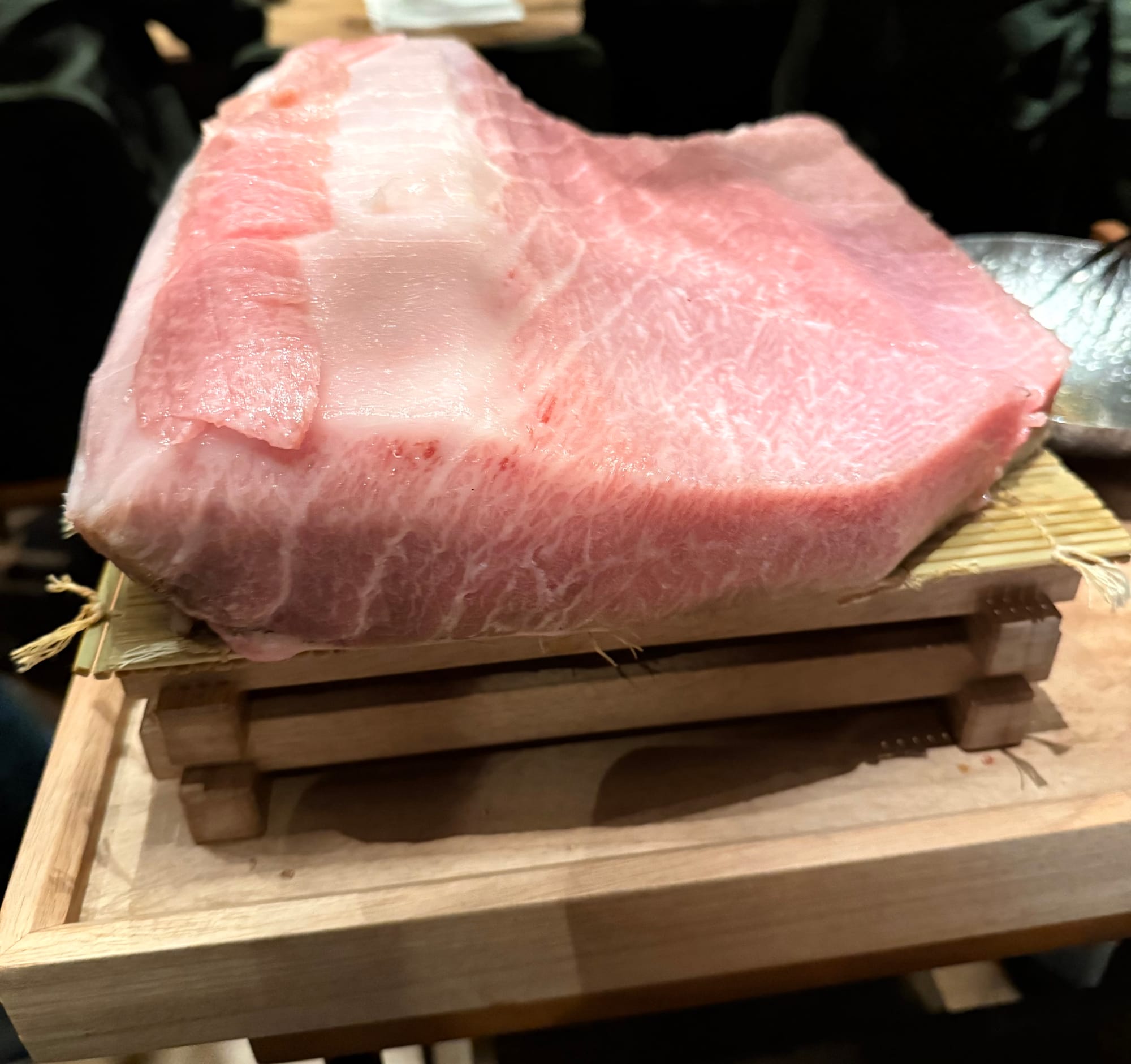
For this course, the only real "sushi" course of the night, a chef wheeled out a giant slab of tuna belly (photo below), skillfully carved some thin slices tableside, and marinated them in a soy sauce broth. The otoro was then gently placed atop some shari (sushi rice), and surrounded with cured egg yolks and uni. The recommendation was to mix everything together before eating, which resulted in a creamy fatty concoction. Delicious and fun, although this was the one dish which felt most like something I'd eaten before.
Course 8: Costa Sur
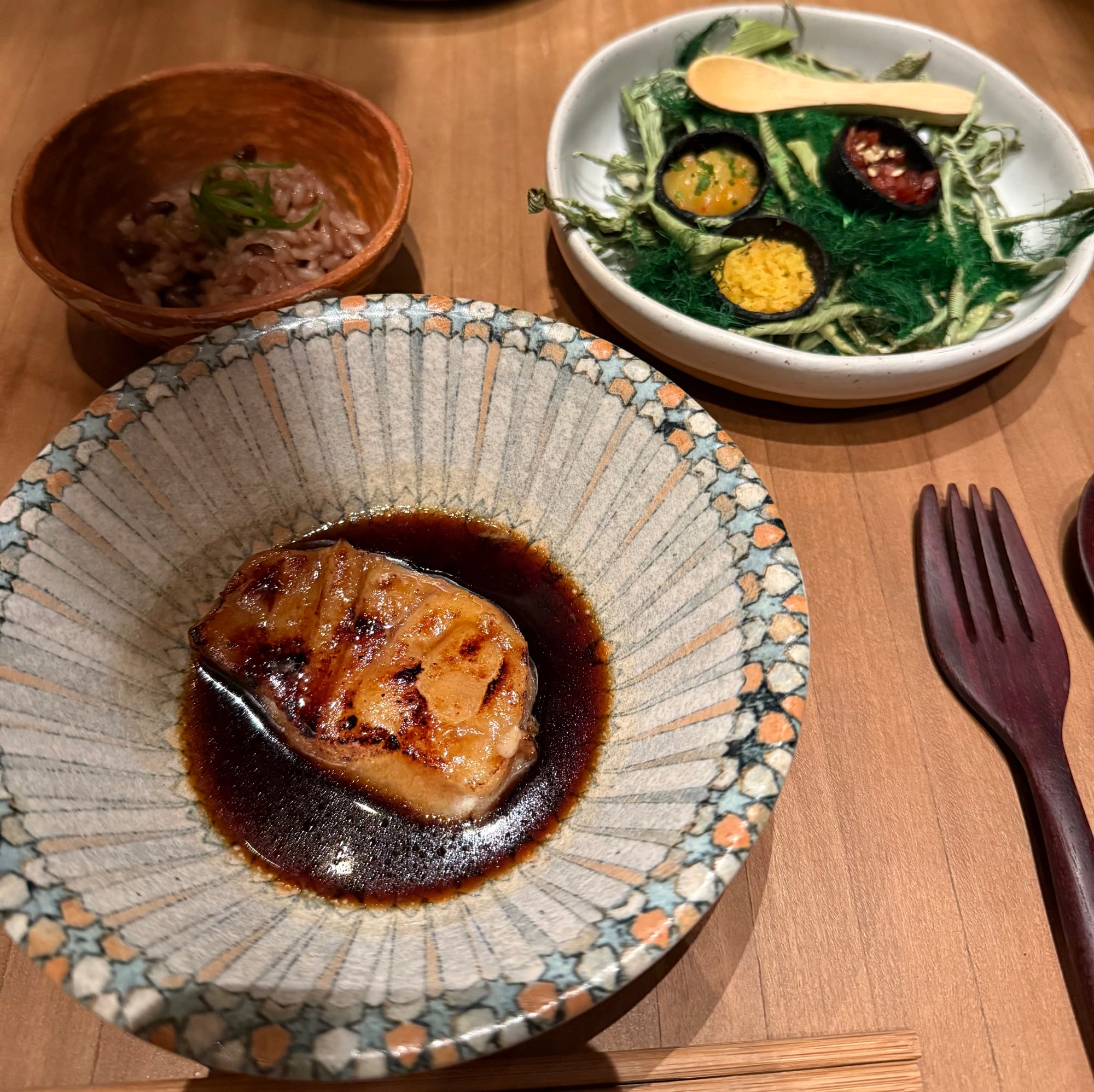
From the South coast of Peru (or perhaps slightly higher in latitude) we get a Chilean seabass. Grilled impeccably and placed in a salty-sweet miso-soy broth, this was served with sekihan (a Japanese version of red beans and rice), and accompanied by several condiments: fukujinzuke (pickled eggplant/daikon), cocona chalaca (a zesty fruity salsa), and some crunchy local panko. You could kind of choose your own adventure with this one, creating bites that were more fruity, funky, or crunchy depending on how much of each was added. This dish seems to be a staple of the menu, though it sometimes features cod instead; I'm glad we got the Patagonian toothfish, though, because it felt more appropriate for South America.
Course 9: Chazuta
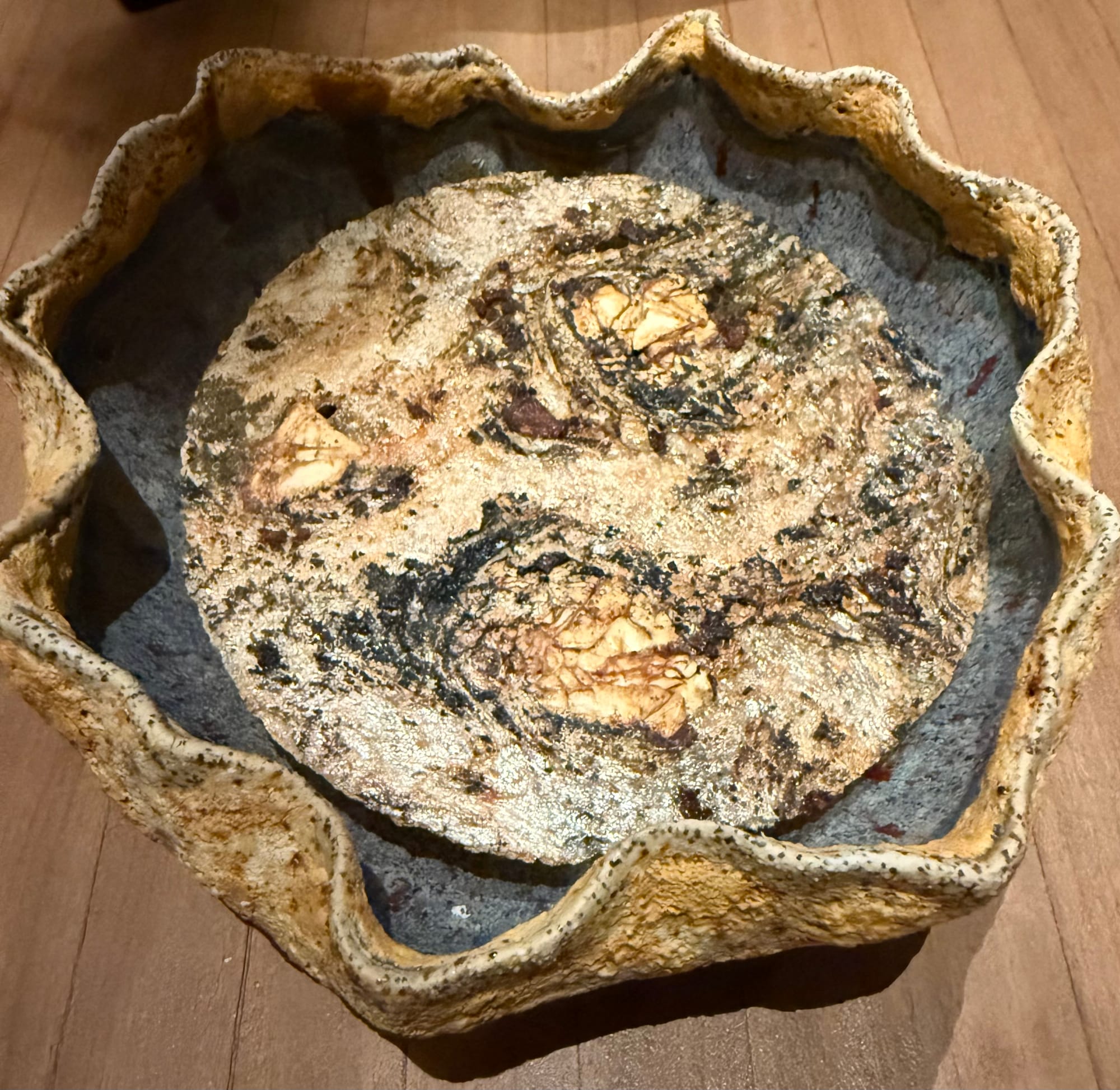
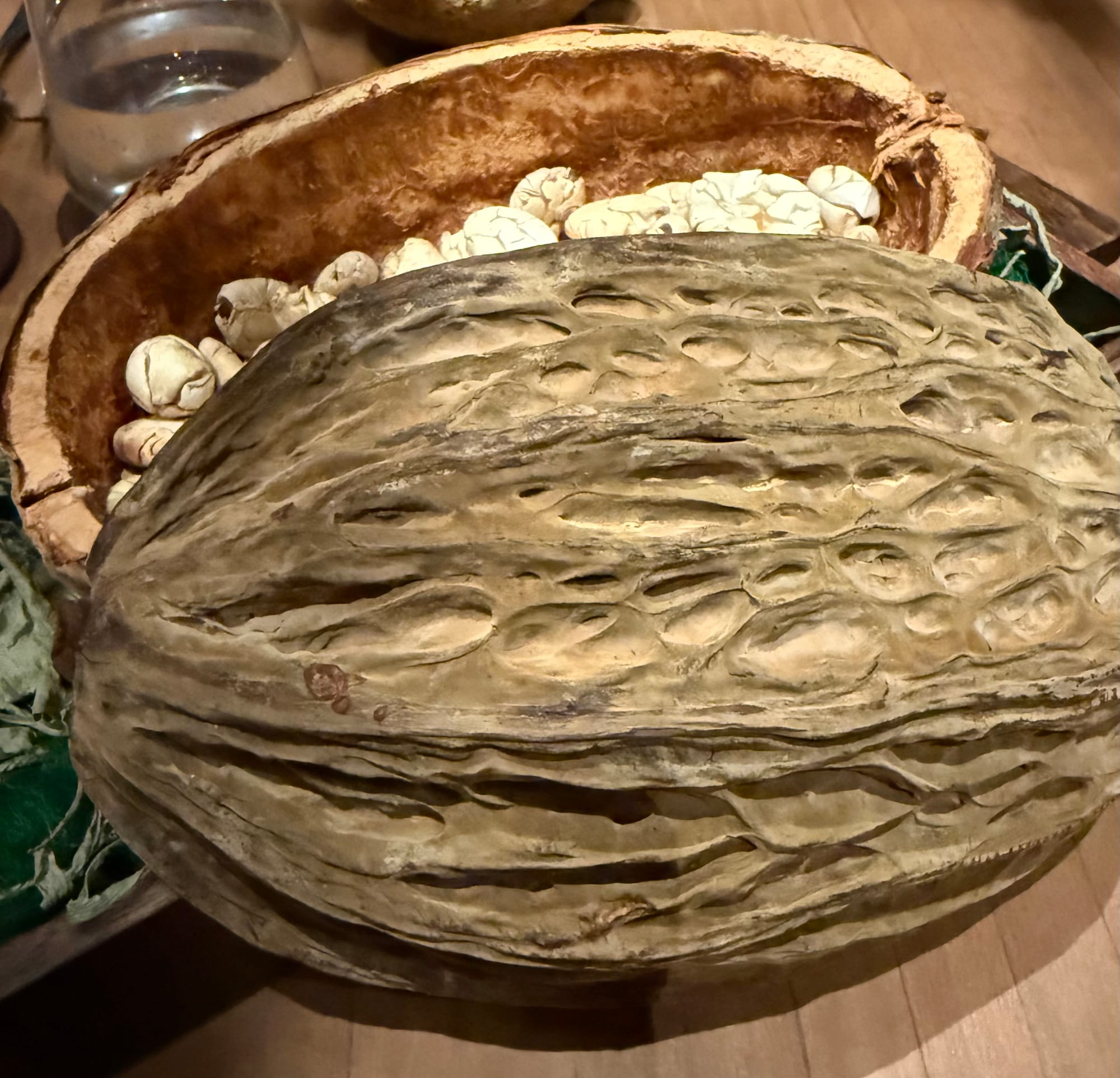
The final savory course was a show-stopper featuring short rib from the Chazuta region of north central Peru. This was served with a tucupí puree (a fermented yellow sauce from the cassava root) and topped with a crisp made with macambo seeds. The latter is a close relative to the cacao tree, with giant woody fruits containing large beans or nuts (see below) which are usually used in savory rather than sweet applications. Here it was made into a large tostada which was much nuttier and more interesting than your usual corn variety. While you can't see it in the above photo, the beef was exquisitely tender, and the tucupí was deliciously sour and not poisonous, as it apparently is during the initial stages of processing!
Course 10: Raspadilla
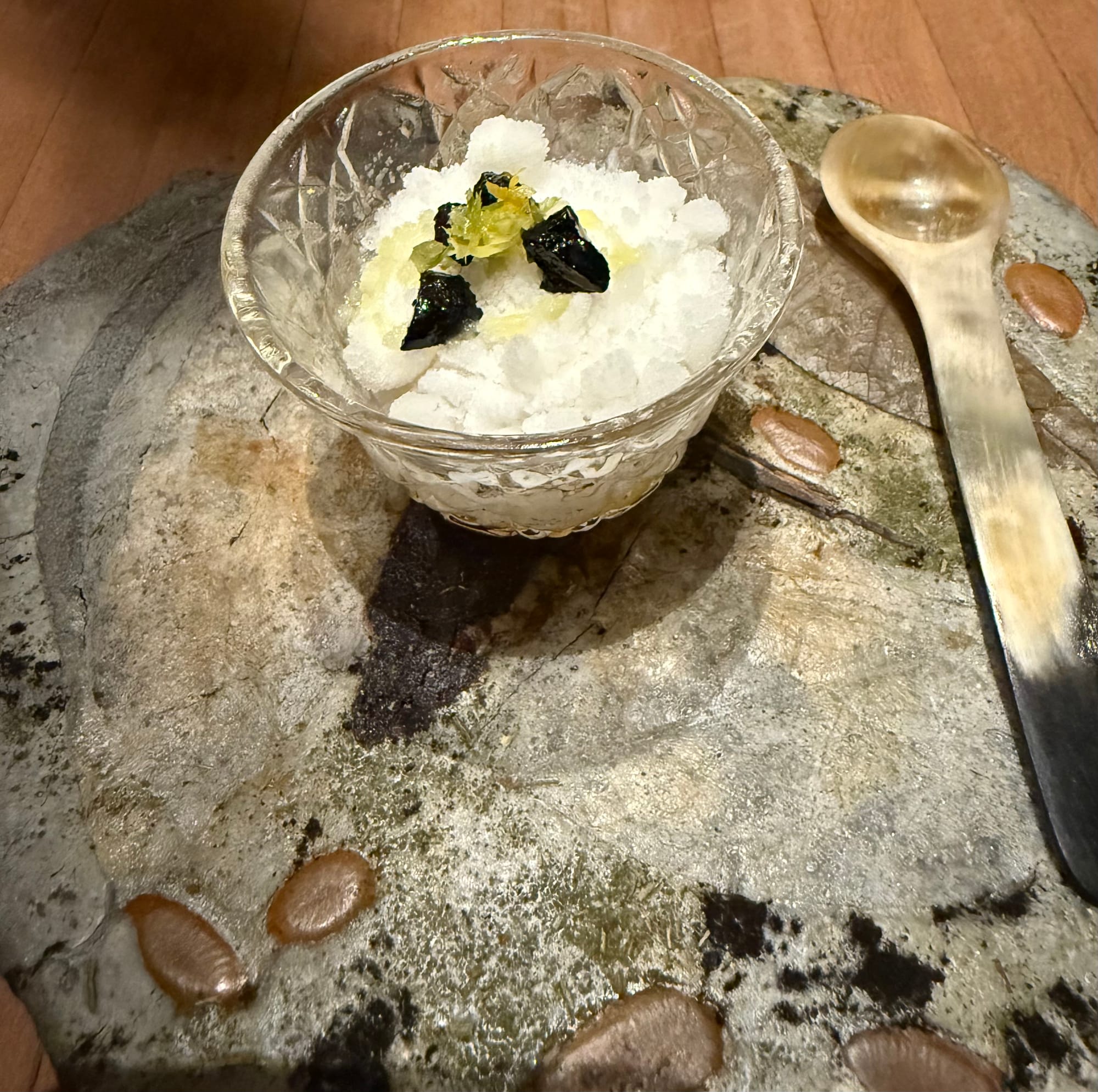
A quick intermezzo between savory and dessert courses. Raspadilla is a Peruvian shaved ice topped with sweet fruity syrups. This was a sorbet made from guabánaba (aka soursop, a fruit I was not familiar with), Andean papaya, persimmon, and almonds. It was sweet but not overly so, and did the job to cleanse the palate before pudding.
Course 11: Maduro A La Brasa
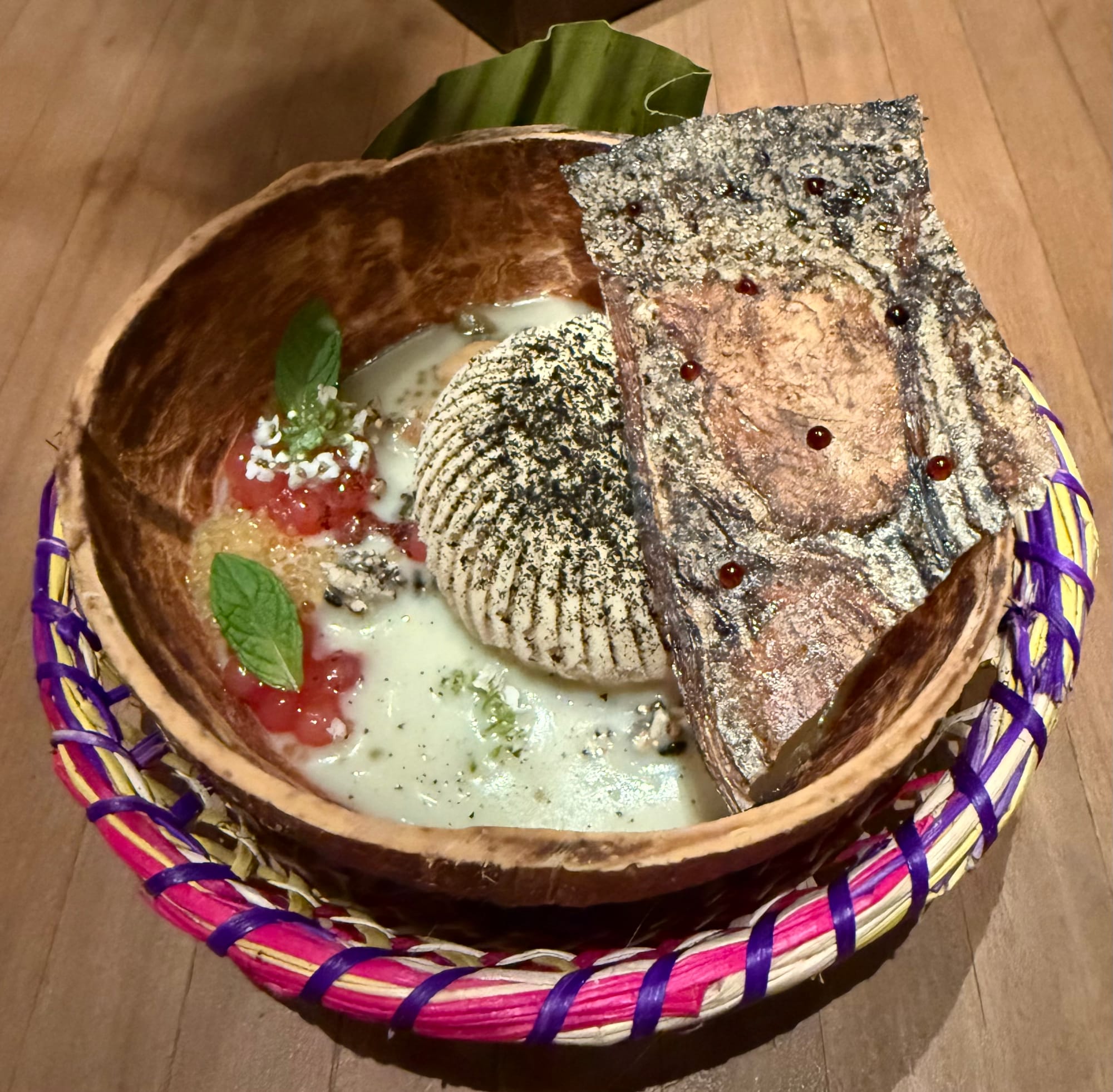
Dessert. Getting pretty full by this point, but obviously I soldiered on. The name refers to grilled plantains, which in this case are turned into ice cream with a bit of shoyu (soy sauce) to liven things up. There were also bits of coconut, camu camu (yet another Amazonian plant with a tart, cherry-like fruit), and tobiko (!!) aka flying fish roe. Maido is famous for its savory-leaning desserts, and this one was truly one-of-a-kind. There was sweetness, sure, but so many wild flavors towards the umami/salty end of the palate that you would never expect at the this stage of dinner. Also, look at that gorgeous cracker topped with tiny dots of camu camu jelly! Astonishing.
Course 12: Okashi
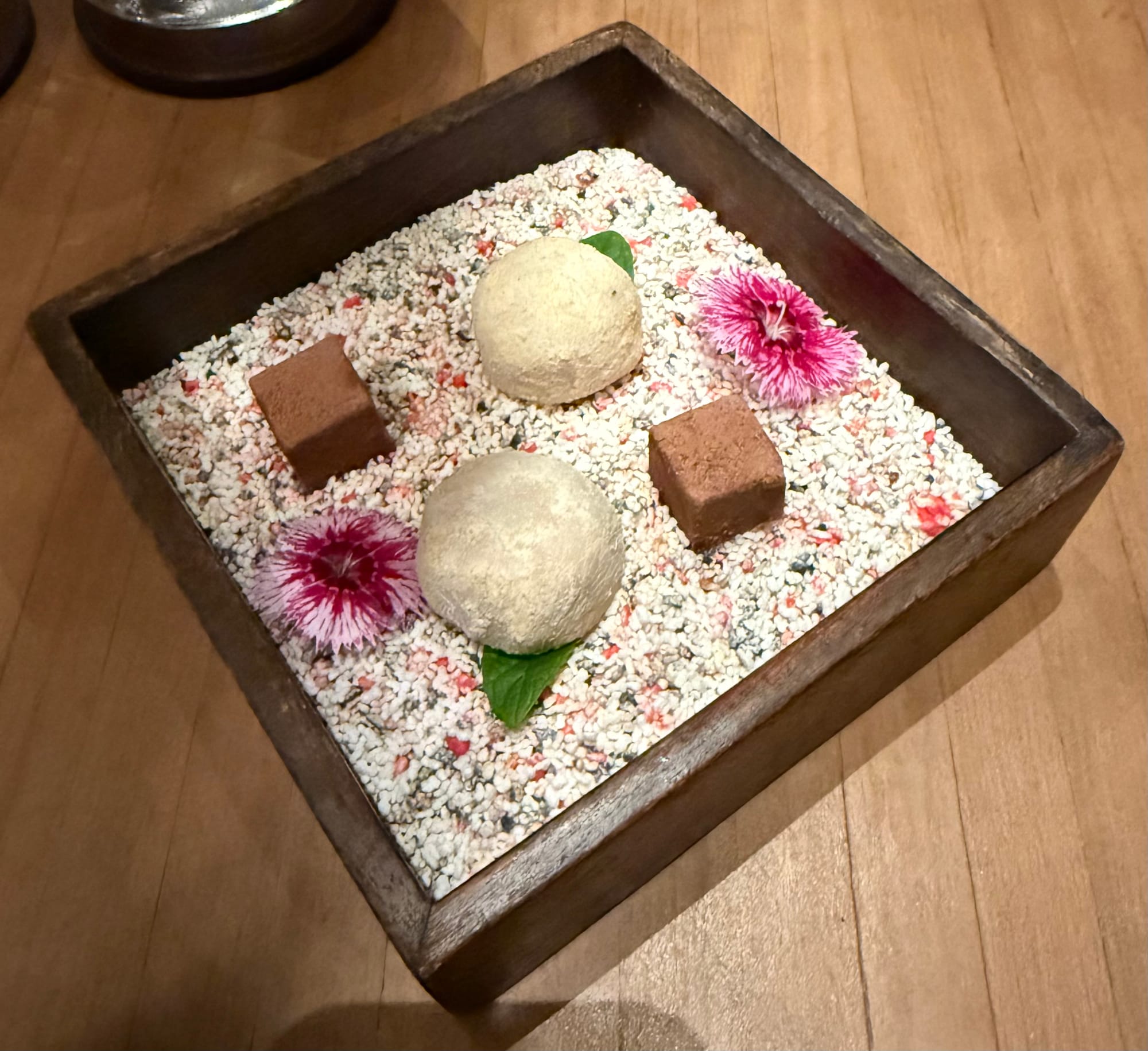
Finally we come to the denouement: two bites to finish off the meal (Okashi is the Japanese word for confectionery). The first was a truffle made with 72% Peruvian cacao and crispy potatoes, which provided a lovely crunch amongst the deep rich bitter chocolate. The other was a lucuma mochi, soft and squishy morsel with a fruity caramel-y flavor (lucuma is a local Andean fruit which is often used in desserts because it is naturally sweet but low in sugar. I enjoyed a scrumptious lucuma smoothie the next day, in fact).
Drinks were great as well, but I won't go into them because we are approaching record-length territory. One regret: as I mentioned above the menu changes often, and I discovered later that only a few weeks prior there had been a CUY (guinea pig!!) course. I'm a big fan of unorthodox meats, but I've never tried this Andean staple... had I known it was a possibility I would have begged the chef to whip one up for me.
Lima is a culinary capital of the world and has tons of celebrated restaurants, such as Central, Astrid y Gastón, Mayta, Kjolle, Mérito, and many others. While I can't speak for those, I can say that Maido is absolutely worth your time and money if you ever find yourself in this part of the planet. For what it's worth, Peru oddly doesn't yet have a Michelin Guide, but I feel pretty confident that if/when that happens, this will almost certainly be awarded a rare three stars. Is it the best restaurant in the world? Probably not, though I can say for sure that anyone interested in expanding their culinary horizons and trying new and unusual ingredients would have an absolute blast here.
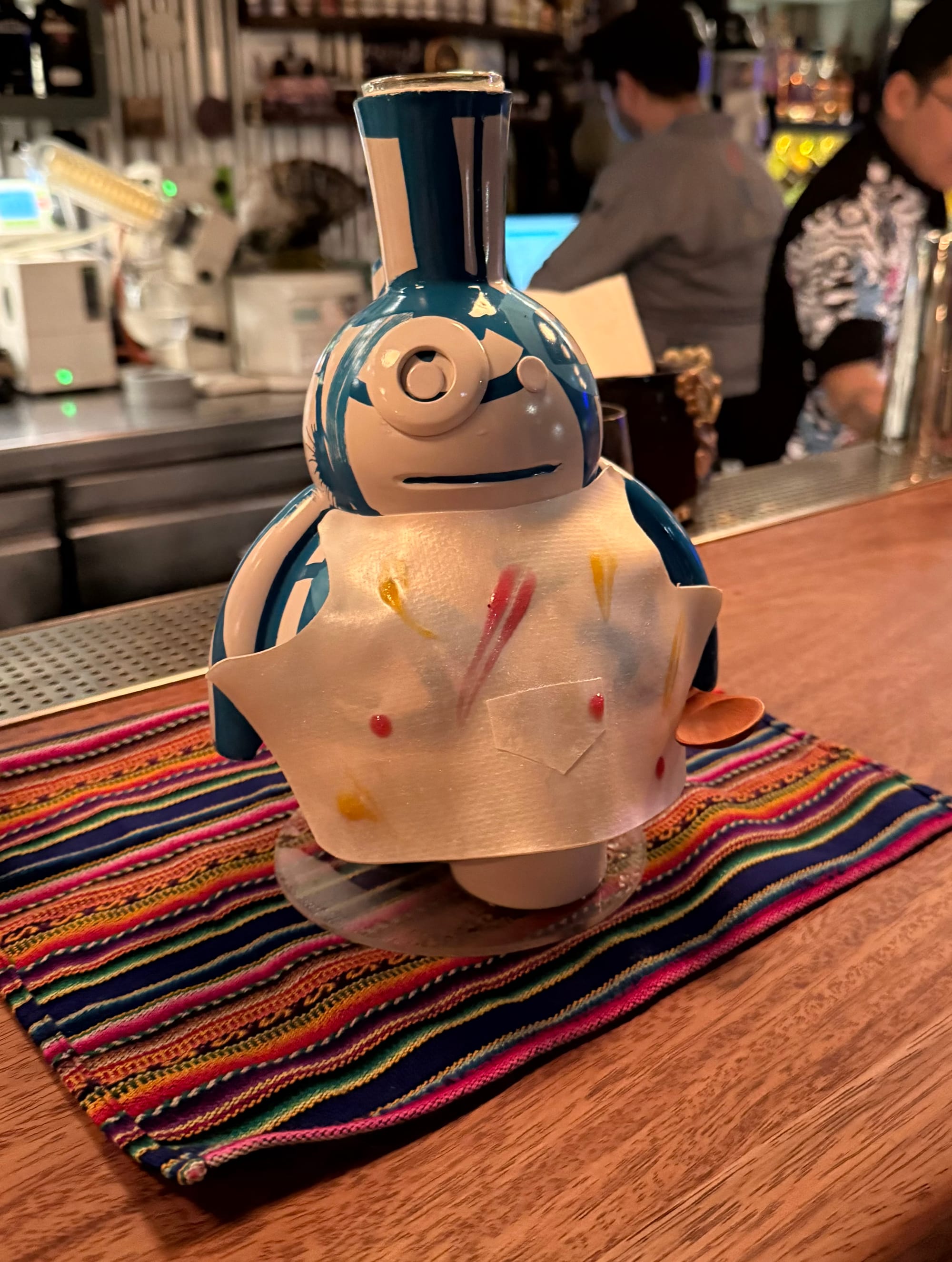
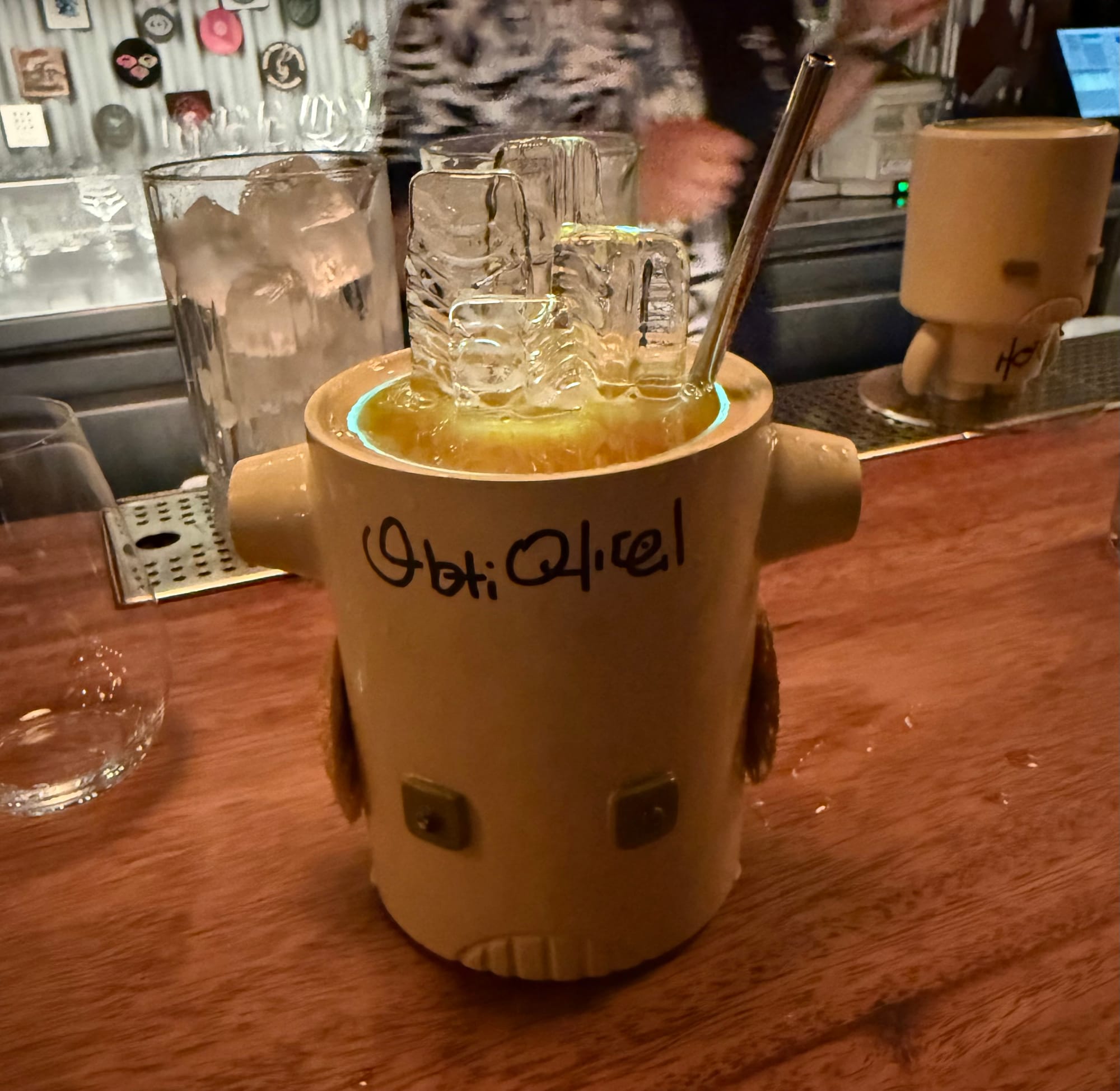
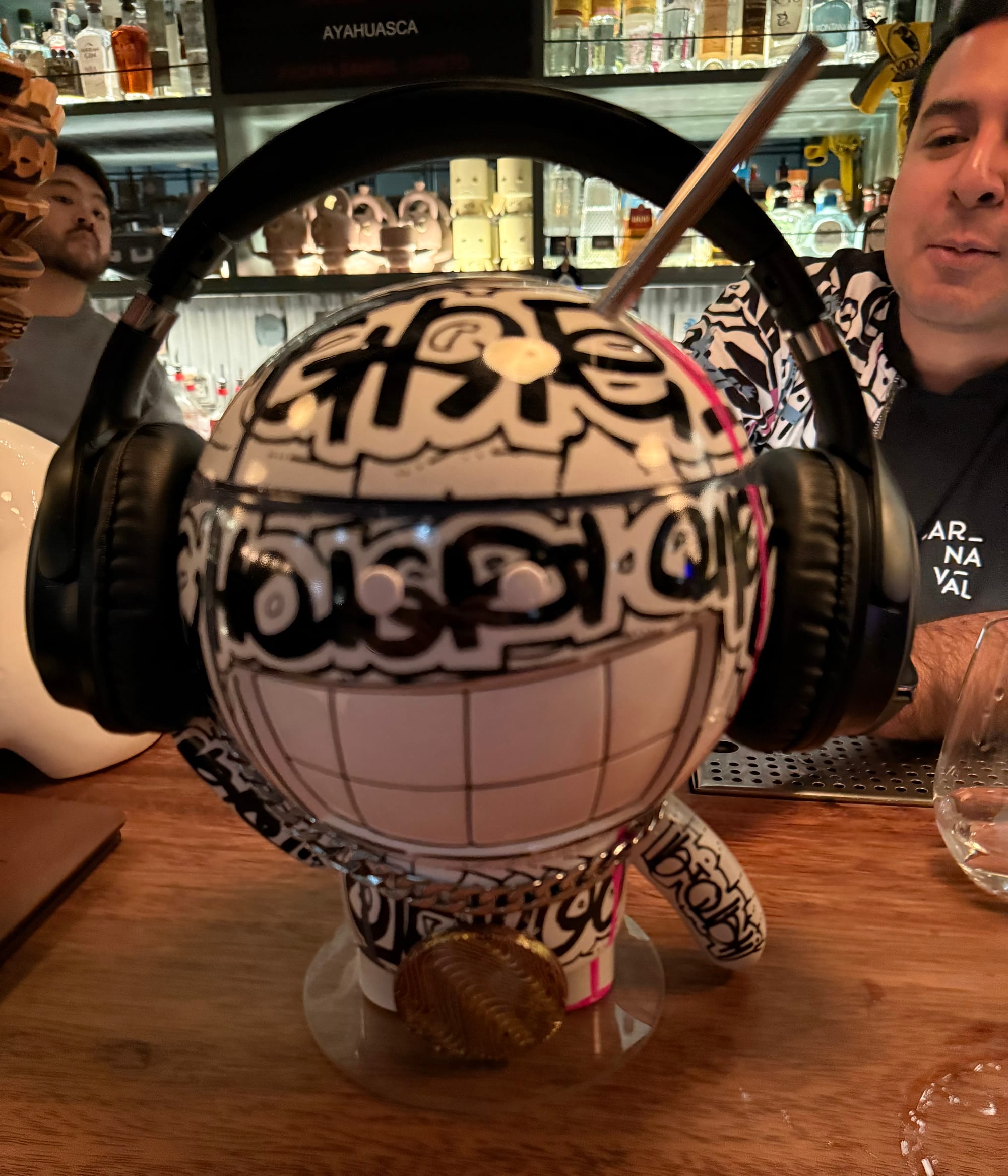
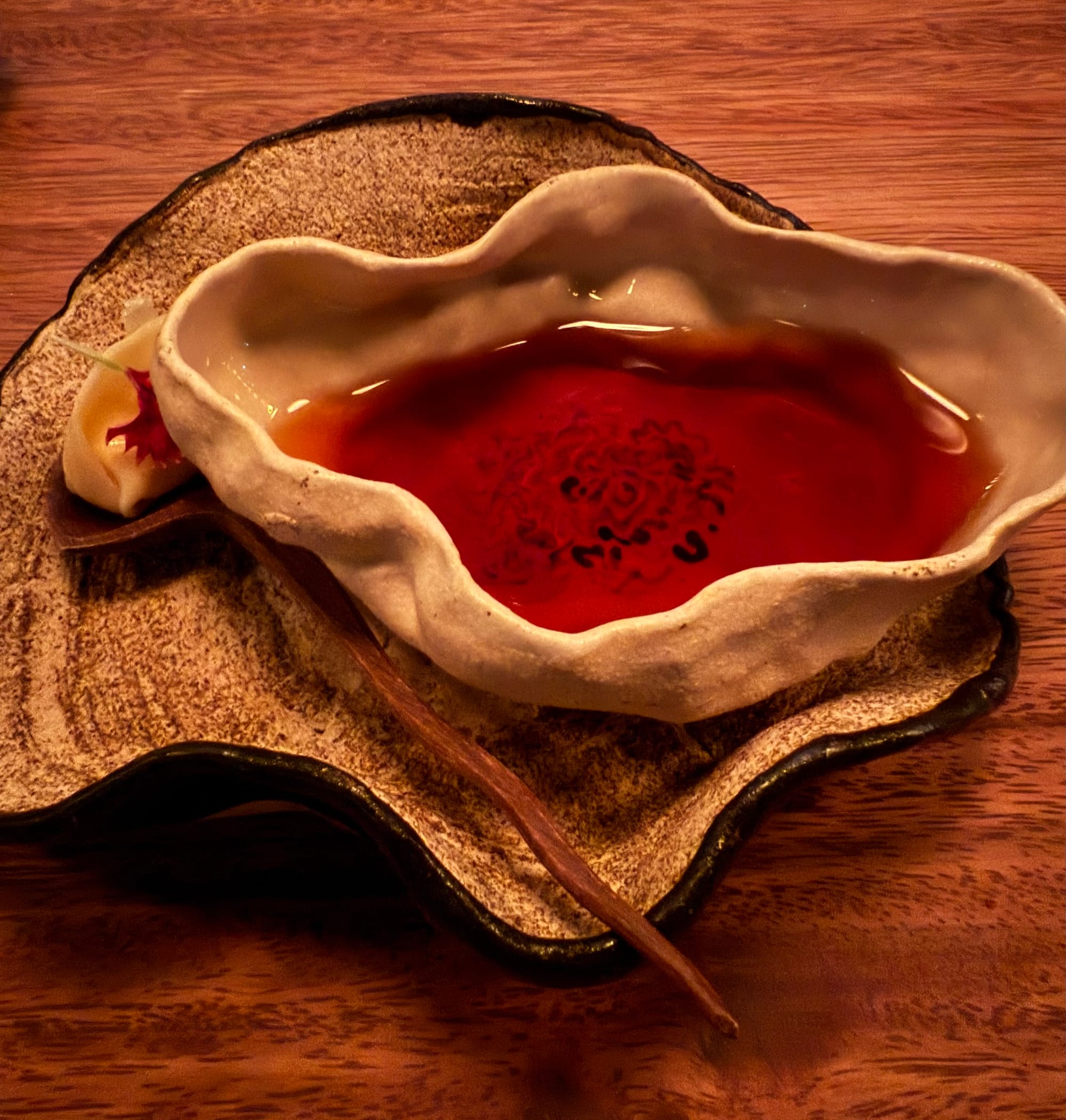
P.S. I'm not doing an official review, but I have to shout out two great cocktail bars in the city. Lady Bee in Barranco and especially Carnaval in San Isidro are tremendous; the latter is probably in my top five bars anywhere in the world. Please enjoy these cool photos of their wild drink receptacles:
After this trip there are a number of new additions to my Beyond Houston guide, some I reviewed and some others. Check it out!
NEXT UP: Enough with this South American stuff. Back home for some good ol' Texas... sushi.