RESTAURANT REVIEW: Bahel Ethiopian Dining
PERIODIC REMINDER: Make sure you're getting the full functionality of the site! If you aren't a subscriber, you can enter your email in the box at the bottom of any post to get updates whenever there's a new review, as well as the ability to leave comments, if you so desire. There are also reference pages for my Houston Restaurant Guide, Houston Drinking Guide, Beyond Houston, an alphabetical index of all reviews, and a page of future reviews. A warm welcome and a huge thank you to my recent new subscribers... hope you enjoy, and please share with anyone you think might be interested!
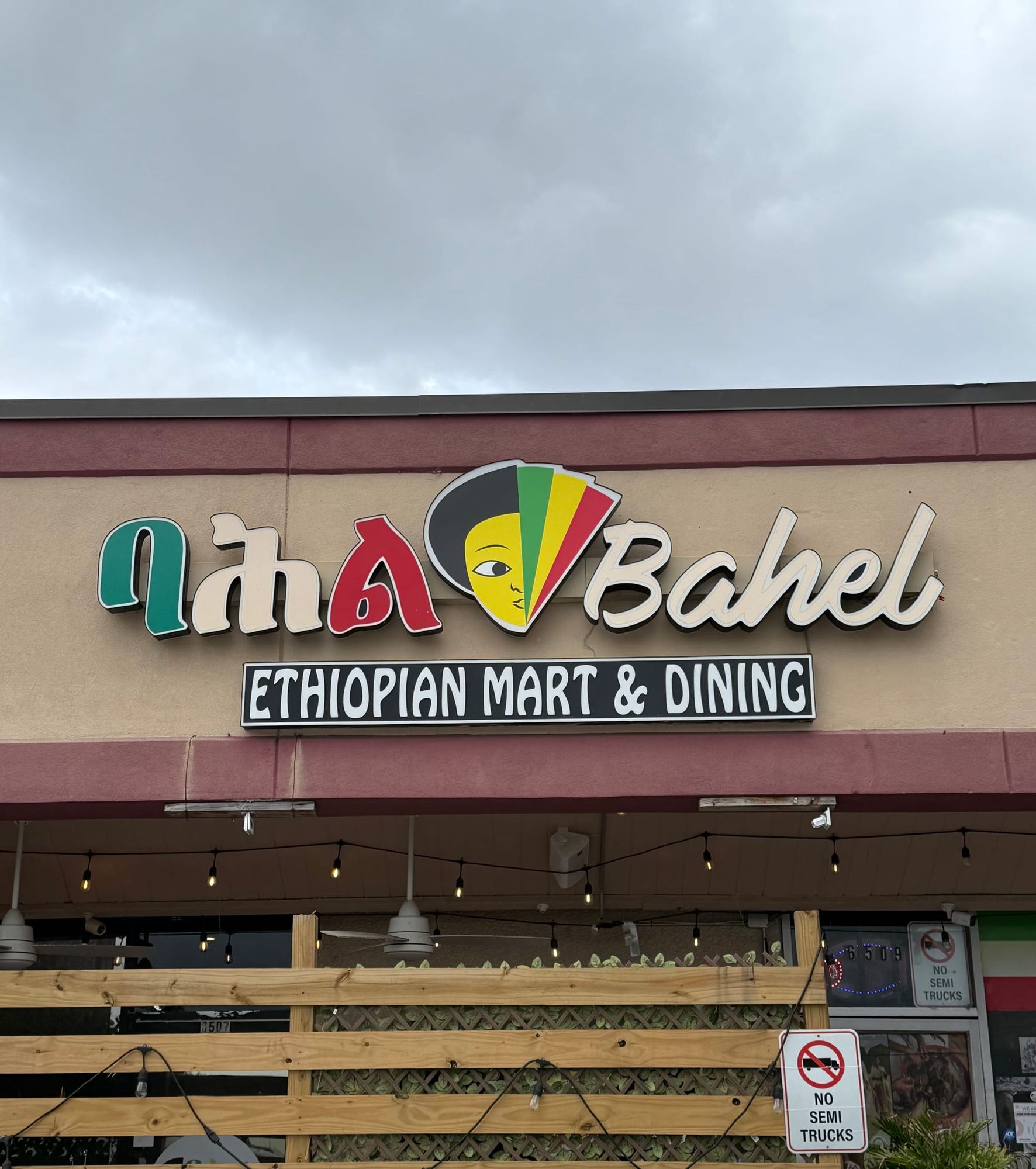
Newer readers may be surprised to learn that I have written about African cuisine before, checking out the standout West African eatery ChòpnBlọk back in August. But in an effort to consistently diversify, it was time to explore the eastern part of the continent. I'd been to Blue Nile once upon a time, but Bahel Ethiopian Dining snagged a spot on the Houston Chronicle Top 100 list last year, so I figured it was worth a gander.
Located in Gulfton in a rather dingy-appearing strip mall (like so many Houston restaurants are), the interior setup is a bit unusual: you enter through a hallway which leads to a takeout counter... the actual dining room seems like a bit of an afterthought hidden off to one side. We coincidentally visited on Fasika, aka Ethiopian/Orthodox Easter, which is a major holiday in that part of the world. There were green streamers covering the floor, which I'm pretty sure were festive decorations to commemorate the occasion, but could possibly be part of the normal decor? Gorgeous, hand-carved traditional wood furnishings dotted the premises, but unfortunately these were not designed with taller individuals in mind, as my knees were jammed into the side of the table the entire time. The other, considerably shorter, member of my party was comfortable, though. Several large televisions were showing Manchester City drubbing Chelsea, if that matters to you.
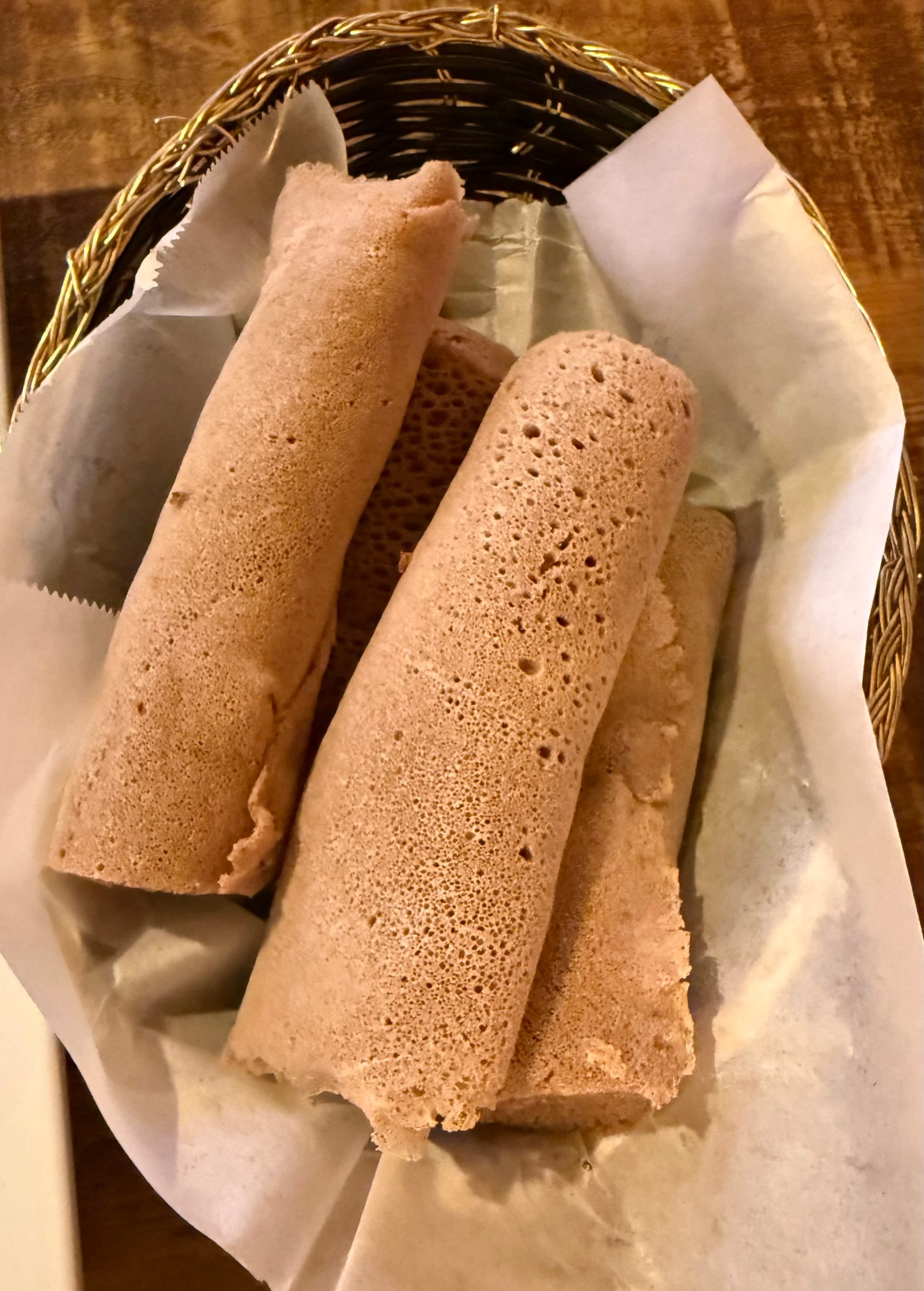
Before getting into what I ate, a few key points on Ethiopian food from someone who has absolutely no business lecturing anyone on Ethiopian food, but who is going to power through it anyway. There are two pillars of this cuisine, wot, which are simmered stews cooked slowly over low heat, and tibs, meats and veggies sautéed over high heat, conceptually similar to a stir-fry. But perhaps the most crucial element of all is injera, a spongy fermented flatbread made from teff flour that is used as both plate and utensil. Functionally analogous to naan in Indian cuisine but even more ubiquitous, the above dishes are often served atop a large, smoothed specimen of the pancake, and accompanied by rolled-up pieces with which to rip apart and grab your bounty. Apparently it is customary to only use one's right hand for this, but as a member of the Chosen, one of the 10% of sinistral individuals in the world, this was obviously a non-starter for me (I know most of you will never begin to understand the struggle, but please consider silently raising your left fist in the air as a sign of solidarity/allyship against Big Scissor and our other right-handed oppressors).
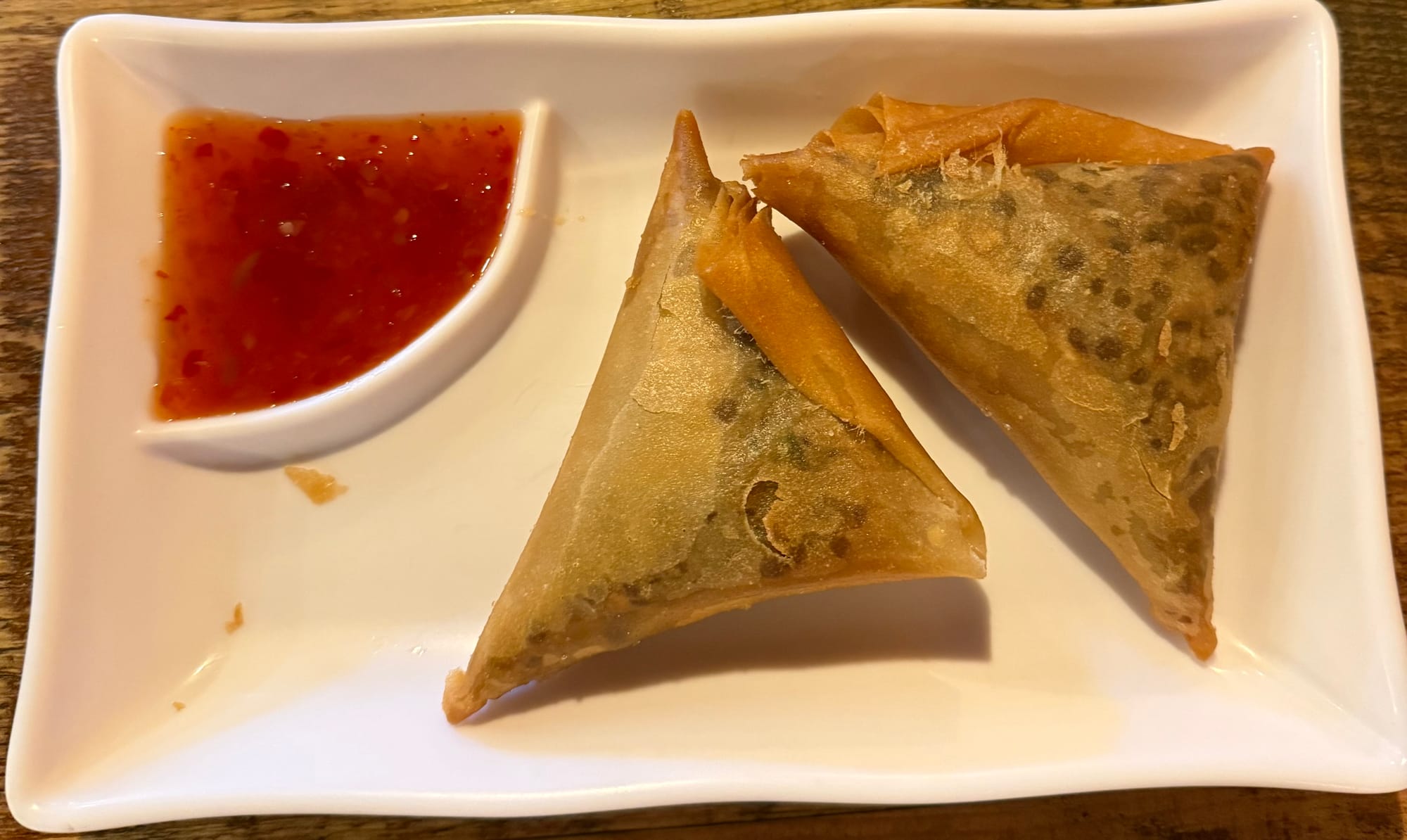
There are a LOT of items on the menu at Bahel, but fortunately your boy had done some research ahead of time and had a general idea of what I wanted to try. The most efficient way is to order one of the combination platters (All Time Favorites, as they are labelled), and our waiter steered us towards #2, the components which will be discussed below. But first, an appetizer: Veggie Sambusas, which are reminiscent not only in name but also in practice to samosas, with a deep-fried triangular pastry shell filled with lentils, onions, and jalapeños. Wonderfully crispy with an earthiness from the lentils as well as some heat, there was also a sweet and sour dipping sauce that added another layer of contrast. I actually may have enjoyed this more than a classic vegetarian samosa, as I sometimes find the potato content a bit excessive in those (don't tell my Indian friends).
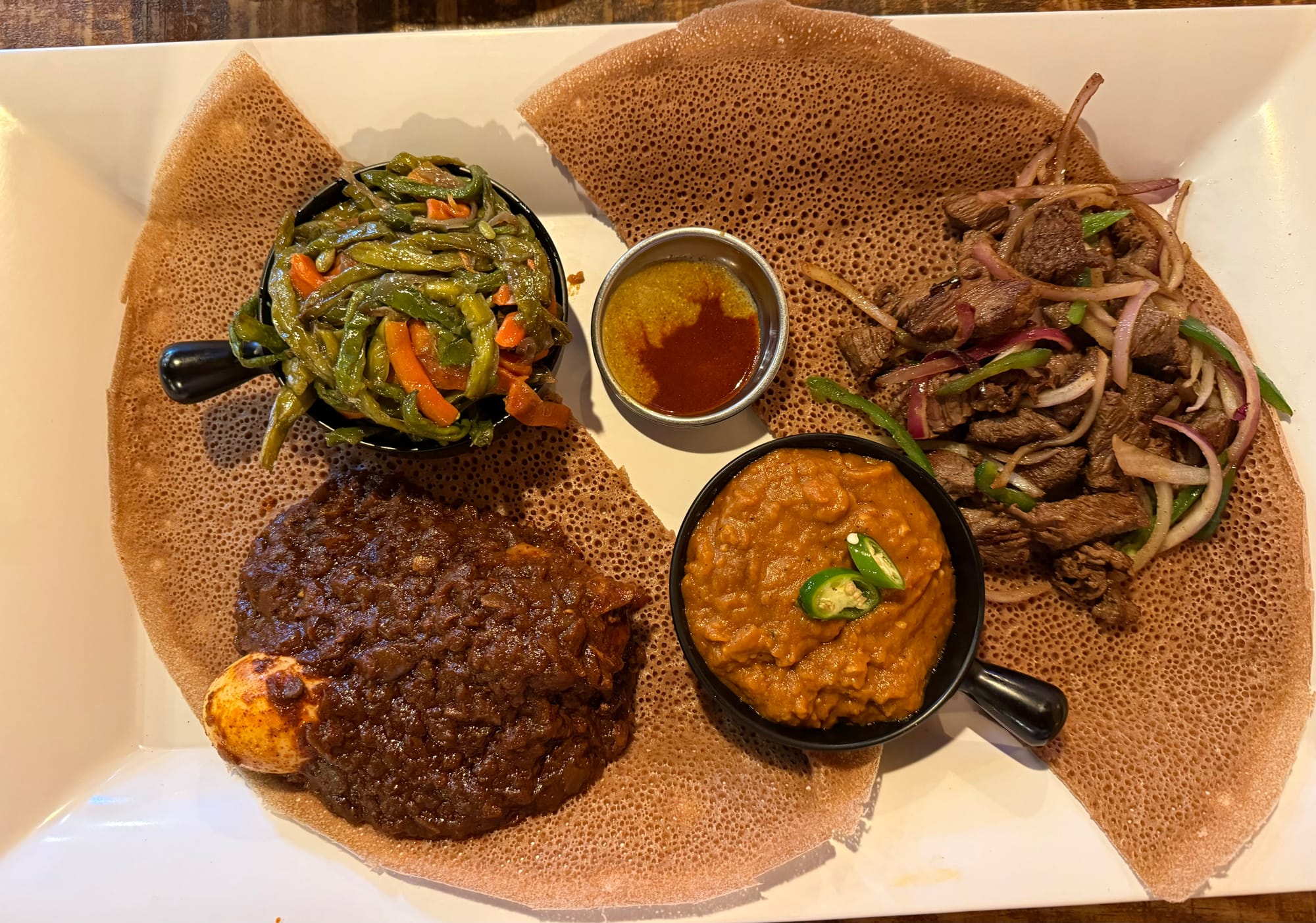
Perhaps the most quintessential Ethiopian dish is Doro Wot, which includes tender chicken leg slow-cooked in a sauce of berbere (a crucial seasoning mixture of this region, featuring chilis combined with a variety of warming spices), caramelized onions, and niter kibbeh (spiced clarified butter), and finished with a hard-boiled egg. The pride of Addis Ababa for a reason, this thick, fiery, hearty stew is truly delicious, with the chicken falling off the bone so easily that I (almost) didn't need to use the token white guy utensil that was provided, mostly able to tear and scoop with the injera it was plated over. Berbere is such a complex blend that the flavors are too numerous to count individually, but ingredients like nutmeg, coriander, allspice, and ajwain elevate the piquant peppers, and honestly this just needs to be used more often in other cuisines. If you ever want to try Ethiopian food but are intimidated by the amount of options, doro wat is absolutely the place to start. I skipped the egg (which I believe is typically added as an inexpensive source of protein), though, since I get enough of that macronutrient in my regular diet, as it were. And because eggs are gross.
Also included was an exemplar of the other Ethiopian backbone, Chikina Tibs, which consists of sirloin cubes marinated with Bahel house sauce and seared with slices of onion and jalapeño peppers. This was very comparable to lomo saltado, though I definitely prefer the versions of that Peruvian staple that I've had in the past, as this didn't quite sing with flavor as much as I would have liked, and while the combination sauce of berbere and horseradish that came with it added some pungency, I was just a tad underwhelmed. Maybe the incomparably-named Derek Tibs (not after Zoolander, as far as I know) would have been better; this iconic dish is often made with lamb and tends to have a crunchier texture, which certainly would have been welcome. No ragrets, though.
Those two were compulsory with the combo we ordered, but it also included a selection of any two vegetarian items. Shiro Wat was an easy choice: ground chickpeas simmered in a rich sauce with garlic and onions, and finished with olive oil and butter. The thick, orange stew had a lovely aroma, and if you grabbed one of the sliced serranos on top, a fantastic heat. I only wish there had been more than two of those. For the second meat-free option, it was suggested we try Fossolia, green beans and carrots cooked down to a soft texture in a mild base of tomatoes and aromatics. Pretty tasty, this was a unique rendition of haricots verts (in the literal translation only, as these were not the longer, thinner beans that term normally refers to), a refreshing alternative to the soy sauce-forward preparations that are so common in Chinese restaurants these days.
One thing I didn't get to try was Kitfo, which is essentially Ethiopian-style steak tartare. I wanted to order combination platter #5 on which it was included, but I was told by our waiter that this was, and I quote, "way too much food for two people". As much as I wanted to prove him wrong, this was lunch after all, and I wasn't trying to be in a coma for the rest of the day. Plus I'm sure everyone is sick of me writing about my third favorite food by now since I've done so approximately one hundred times, so this will have to wait.
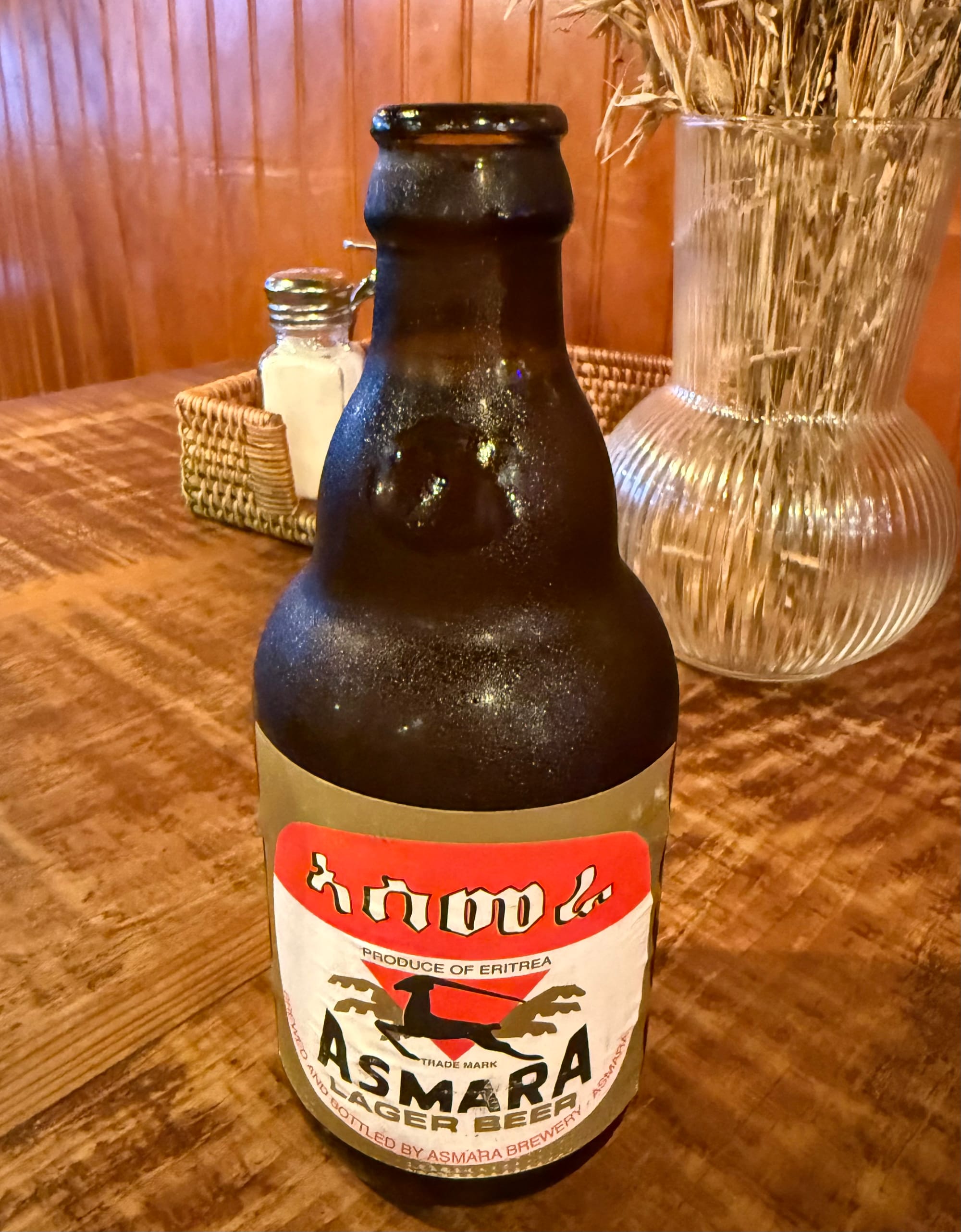
As far as beverages go, it's relatively no-frills, with Ethiopian coffee and a biting ginger tea, as well as a few domestic beers. However, in a stroke of fortune, I spied a man at another table with an Asmara lager, which not only had I never tried before, but it would also be my first ever brew from Eritrea, now the 69th country from which I have sampled a beer. Nice. It was nothing to write home about, but it was more about the novelty and uniqueness for me. I am just glad that Eritrea and Ethiopia finally reached peace in 2018 that allowed me to experience this momentous occasion, though recent events in the Tigray War (whatever you do, do not read about this on Wikipedia, it's super disturbing) and territorial disputes over the Red Sea port city of Assab may mean that Asmara is not available here for much longer.
On the whole I'd describe this one as "good not great"... everything was solid, but outside of the doro wat, nothing really blew me away either. It's not a bad place to start an Ethiopian food journey, though there might be some better options in the Houston area. But hey, it's always fun to try new things, and not every place can make my best-of lists.
NEXT UP: The committee is still engaged in deliberations, but we may have a new #1 overall best cocktail bar in Houston