RESTAURANT REVIEW: March

Among a wave of recent publicity around Aga's, including the NY Times article (and others), various commentary to that publication, and the backlash to that backlash, someone made the salient point that while Houston is absolutely world-class when it comes to the bottom two-thirds of the culinary spectrum, it tends to punch below its weight as a fine dining city. And though that may be true, there's one massive exception to that dictum... and this is March.
The crown jewel in the Goodnight Hospitality portfolio is located directly above its more casual sister Rosie Cannonball in Montrose. Opened bravely/insanely during the pandemic, March quickly garnered a reputation as one of the finest restaurants in Houston, and earned a Michelin star during the first Texas guide unveiling. Chef partner Felipe Riccio seeks to answer the question, "What does the Mediterranean mean?" through examination of gastronomy, history, and cultures of its regions. Every five months or so they shut down for a few weeks to completely reinvent the menu around a different territory abutting that great sea. In the past they've explored Greece, the Levant, and Genoa among others (the only other time I visited, back in November 2021, Catalonia was highlighted), but now in Season XII, Portugal is in the spotlight, which had me extremely excited as it is one of my favorite countries in Europe.
Does Portuguese food even qualify as Mediterranean? Cartographically technically no, but spiritually and culinarily it has much in common with its Iberian neighbor, though its place along Atlantic coastline and resulting seafaring genealogy have resulted in a greater variety of spices and international influences. Ingredients like olive oil, pork, garlic, and preserved fish are staples of this small but overly influential nation. As we will soon learn, this cuisine is the amalgamation of all the wonders that its explorers encountered around the world, transformed into something that is uniquely Portugal.
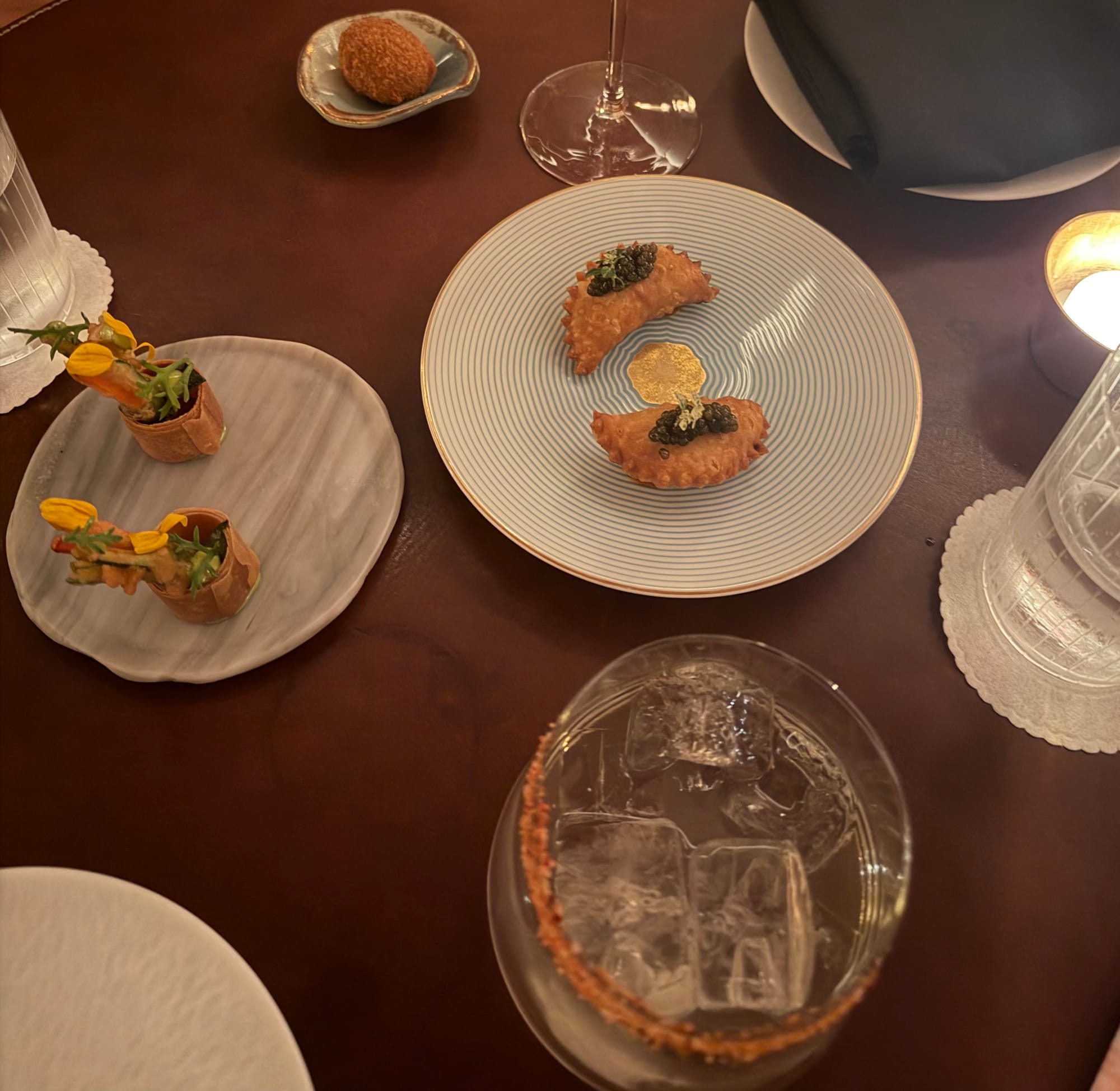
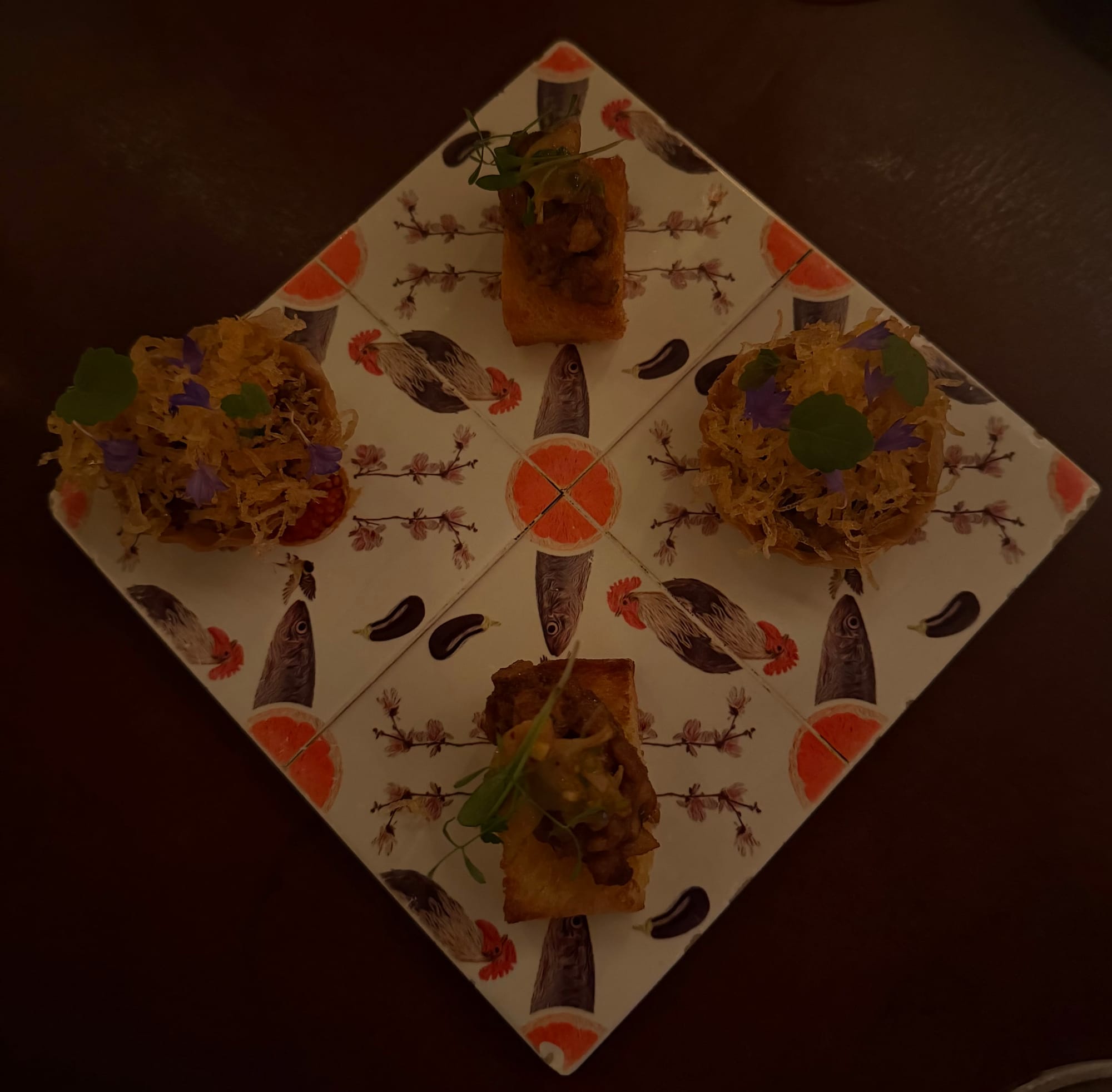
Your evening at March begins in the lounge/bar area for some small bites and a welcome splash of house-made vermouth with passion fruit, orange, black tea, and Portuguese spices. Amongst this relaxing space, underneath a handsome Matt Kleberg piece, came a parade of snacks, themed after Portugal's history as a powerhouse of trade routes. Peixinhos Da Horta were tempura-fried vegetable sticks with tarragon aioli representing Japan (remember the missionaries in Shōgun?). Vinha D'Alhos took the form of lobster vindaloo empanadas topped with caviar, a nod to Goa, India. Peri Peri, the famed spice mix originating in Mozambique from Brazilian peppers, consisted of a fiery duck rillette atop a shell of toasted rice. And Porco Balichão, hailing from Macau, featured a prism of milk bread carrying precious cargo of Manila clams, braised pork belly, and cilantro. Fantastic all, but the empanadas were a show-stopper, combining two of my all-time favorite foods.
There's also a drink menu with beverages named for former Portuguese territories. If there's one thing I love even more than food, it's geography, so this was an absolute delight (one of my favorite trivia questions involves naming the eight countries where Portuguese is the official language... I've already alluded to several of them if you want to play for yourself). After finishing the hors d'oeuvres, you are given a hot scented towel and escorted across the hall to the main dining area.
This room has a mere nine tables, with low lighting and bookended on one end by a huge Oliver Jeffers painting and a stunning emulation of a living wall on the other, with dozens of shades of green and brown textiles creating a giant mossy carpet inside the potentially partitioned private space. Little touches like custom purse stools and references to prior visits if you are a returning patron underscore the commitment to unmatched hospitality.
Until recently, diners booked either a six- or nine-course meal, but this season they have transitioned to a single seven-course experience, though the number is used very loosely, as the above snacks and a few other interspersed extras don't count towards that septet. After the prior globetrotting imperial expedition, the motif here is closer to home (assuming your name is Bruno Fernandes), with plates inspired by the rustic Portuguese countryside.
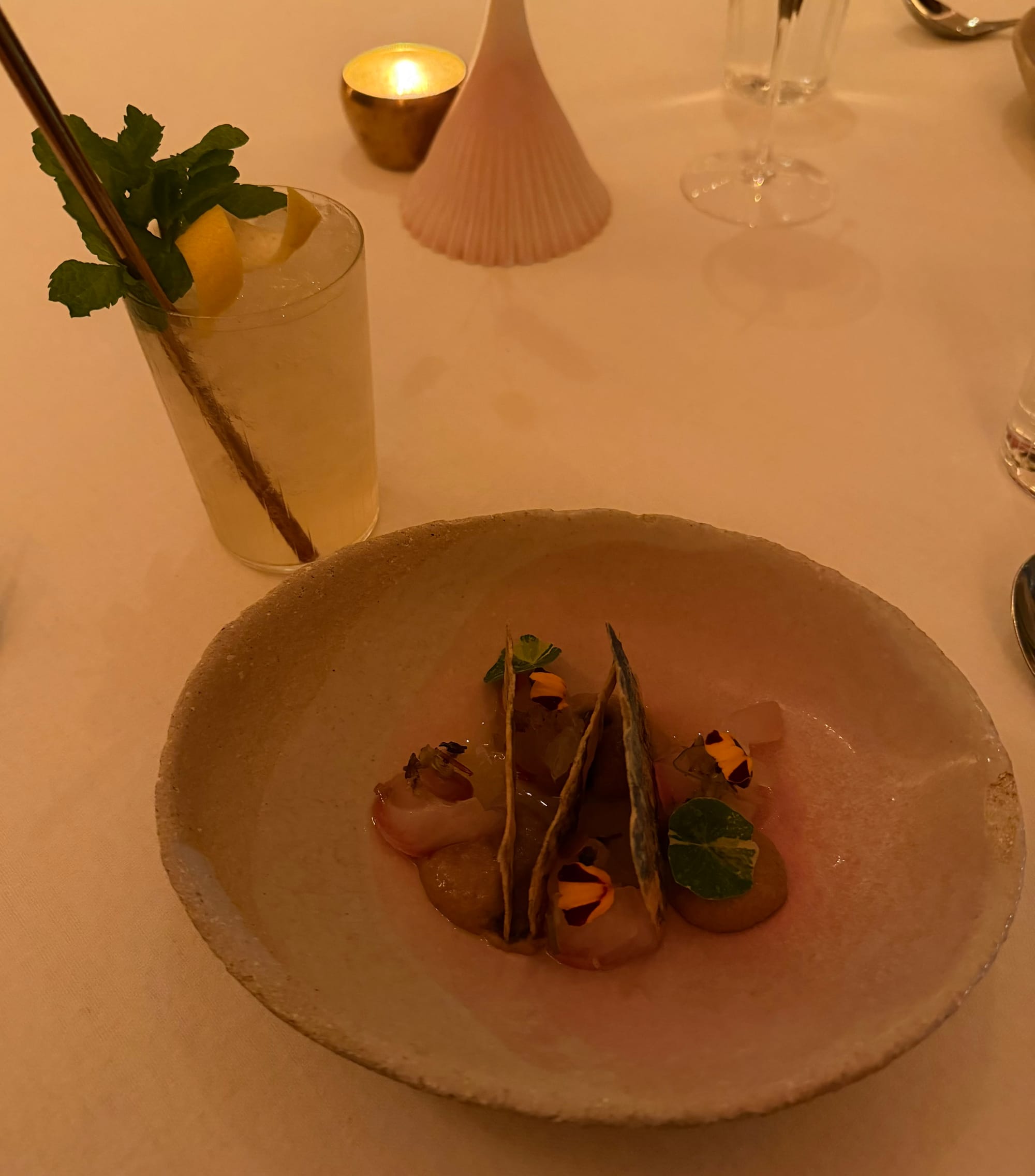
It makes sense the main proceedings would begin with a play on the national dish of Portugal, dried and salted codfish. Here, in the Bacalhau Crudo, the starring swimmer is instead citrus-cured Japanese alamco jack, though the accompanying caramelized cabbage is infused with salt cod, in case any Portuguese cuisine hardliners were concerned. This raw interpretation was much more acidic than any Bacalhau I've ever tried (all one of them), with candied lemon and citron oil, as well as some pickled Thai chile for heat. Cuquillo olives and a crispy seaweed chip provided some texture and contrast. A Cristiano Ronaldo 40-yard free kick goal vs Arsenal of a way to kick things off (or a slam dunk, if you are uncultured and don't watch Manchester United).
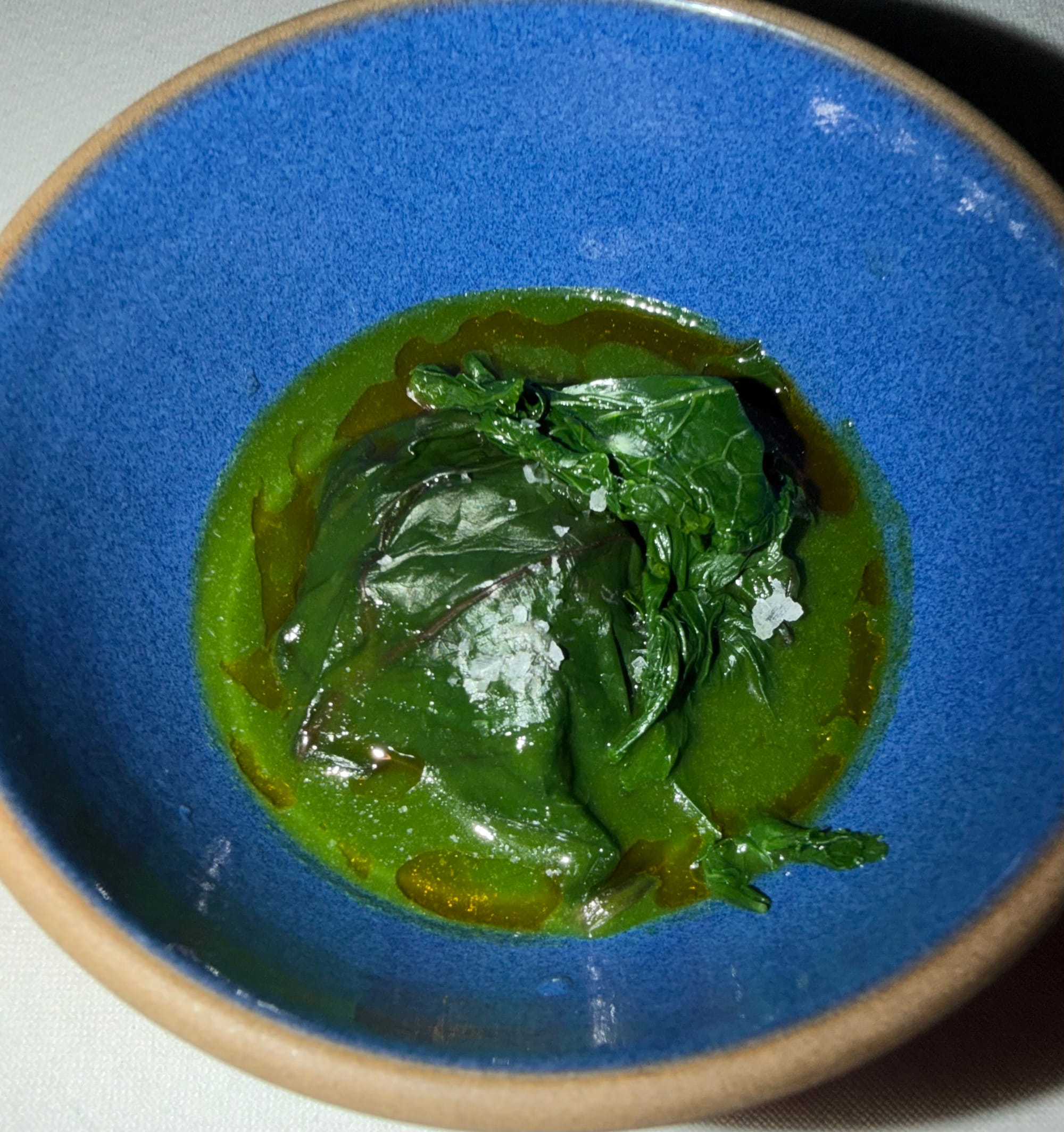
Second was the Caldo Verde (not to be confused with Bebé's Cabo Verde), a hearty green stew that was described as their version of chips and salsa, a ubiquitous pre-meal snack... which is a bit odd, but who am I to judge other cultures? The verdant broth consists of roasted potato and braised greens, often Portuguese cabbage but in this case kale. Classically there's some sausage involved, but March's vegetarian rendition emulated that flavor with chorizo spices. Some sunchoke was there as well to add a bit of nuttiness. Should this replace chips and salsa as the go-to complimentary starter at Tex-Mex restaurants? Certainly not, but I was surprised by how much I enjoyed something so green.
Most fine dining establishments offer wine pairings, but my favorite thing about March is the opportunity to do a curated cocktail pairing. If you choose that route, each dish (or, occasionally, two) comes with a thoughtful mini-drink mate. The first two courses shared the Peneda, a tall concoction of brandy, spruce tips, bark syrup, juniper, and orange peel. Quite fizzy and forest-y, this went quite well with the earthy bitterness of the aforementioned kale soup.
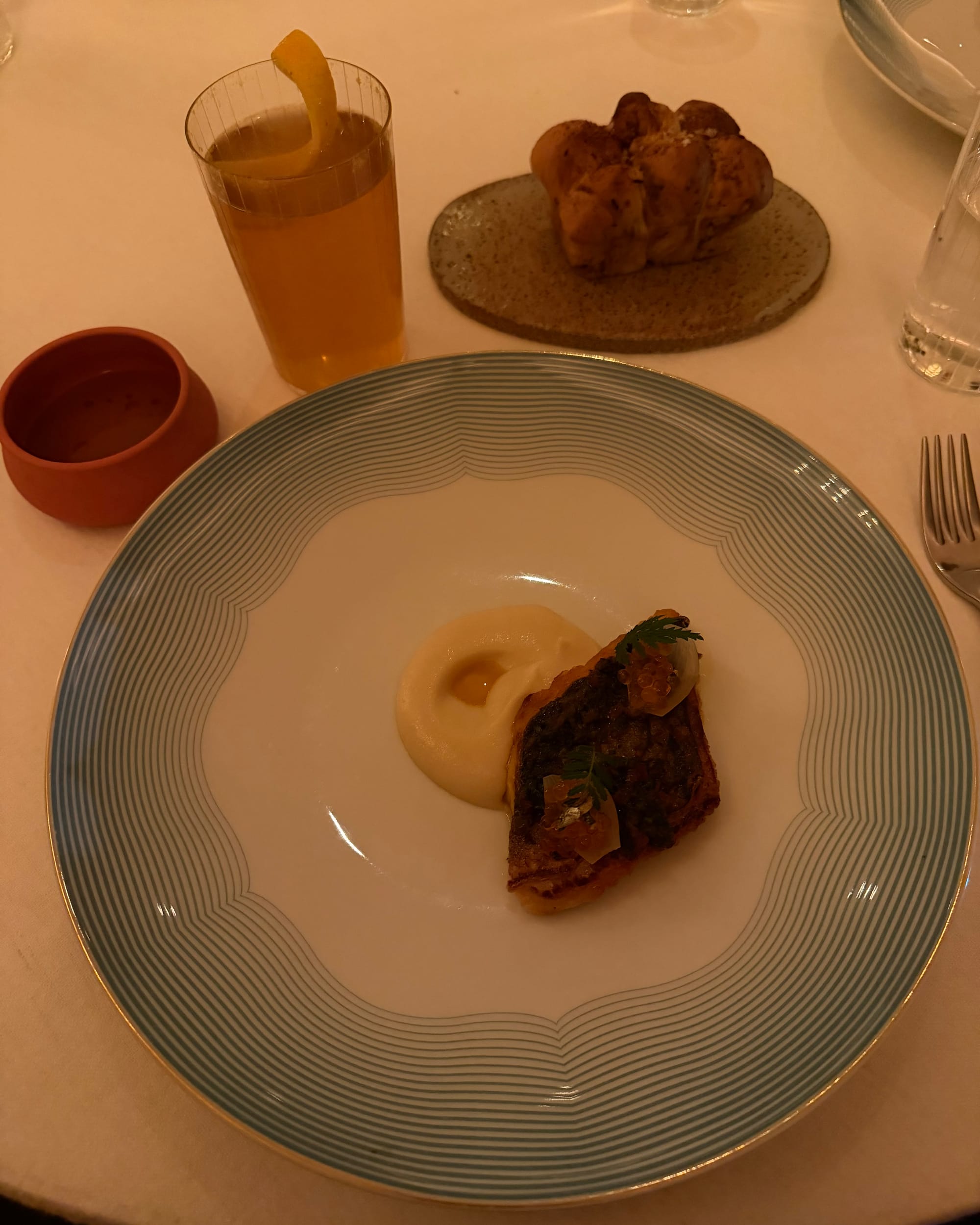
Next came the Cataplana, which is both the name of a traditional Algarvian fish stew as well as the vessel used to make it, a clamshell-shaped pan that was sort of a primordial pressure cooker which was often found on ships. The version here was deconstructed, with a filet of seared robalo (aka snook) subbing for the more common sea bass, garnished with onion petals, trout roe, and tiny baby eels, and served alongside a smooth, rich onion soubise. Honestly that would have been a great plate on its own, but of course there was more: an exquisitely-baked brioche infused with chouriço (the Portuguese version of the famous sausage, similar but less paprika-forward than its Spanish cousin), and, in a little ramekin meant to be sipped between bites, an incomparable clam and tomato broth that was so delicious it nearly made my eyes roll back in my head in ecstasy. An absolute stunner of a dish.
Its paired beverage was a take on the Baltimore-born Spaghett, a beer/amaro blend that is inexplicably hot in the streets these days. Instead of the familiar Miller High Life/Aperol recipe, this version used Super Bock lager (one of the two major brews of Portugal, the other being Sagres) and Gran Classico Bitter with lemon juice, served in a highball glass instead of a bottle of the champagne of beers, as is customary. This was perhaps the only slight peccadillo of the night, but largely because I don't really care for beer cocktails, whether it's one of these, an Irish car bomb, a michelada, or any other. I can definitely let it slide though, since it's more of a personal preference than any comment on quality. You could call this the Diogo Dalot of the bunch, if you utilize an extremely niche comparison system.
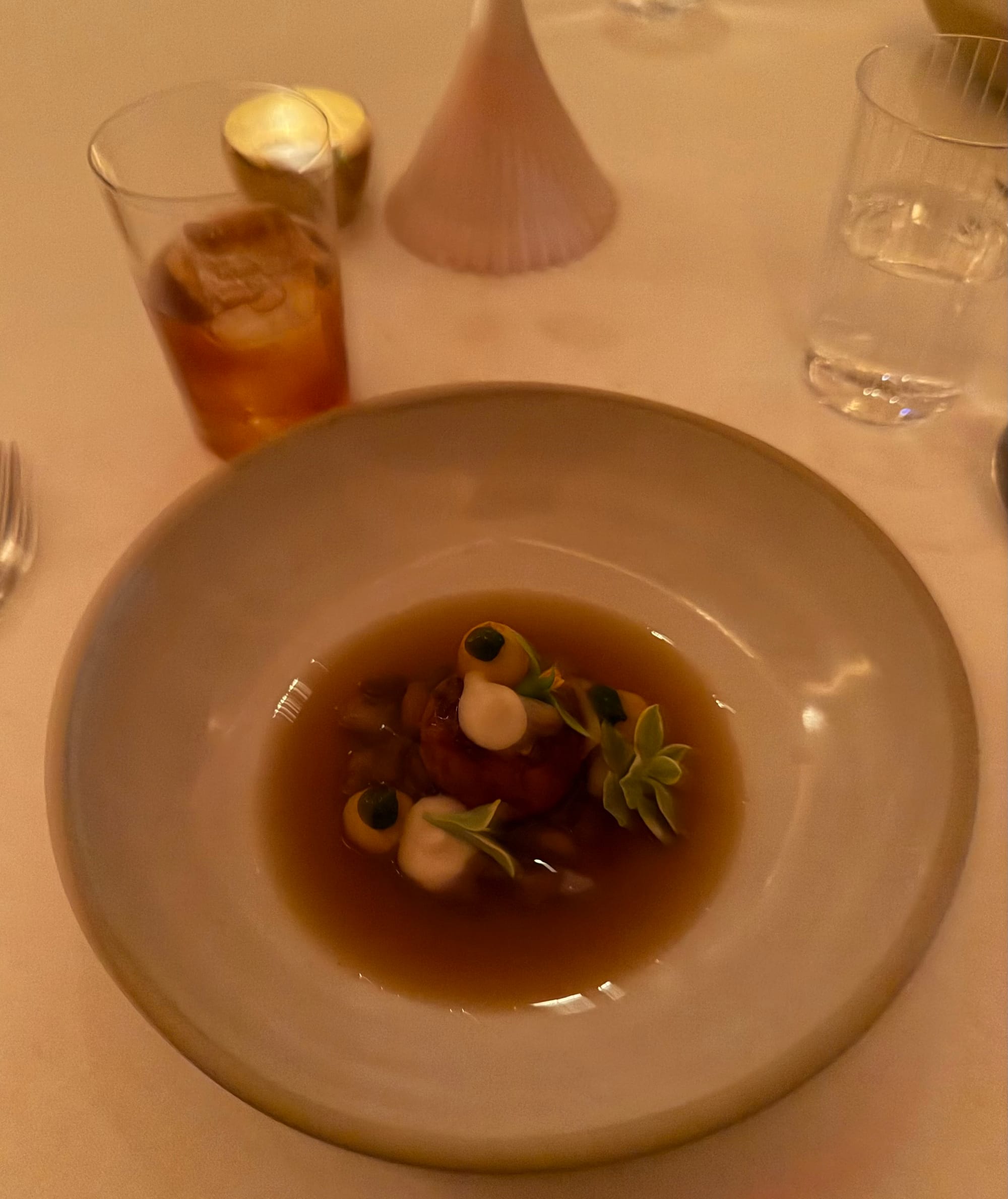
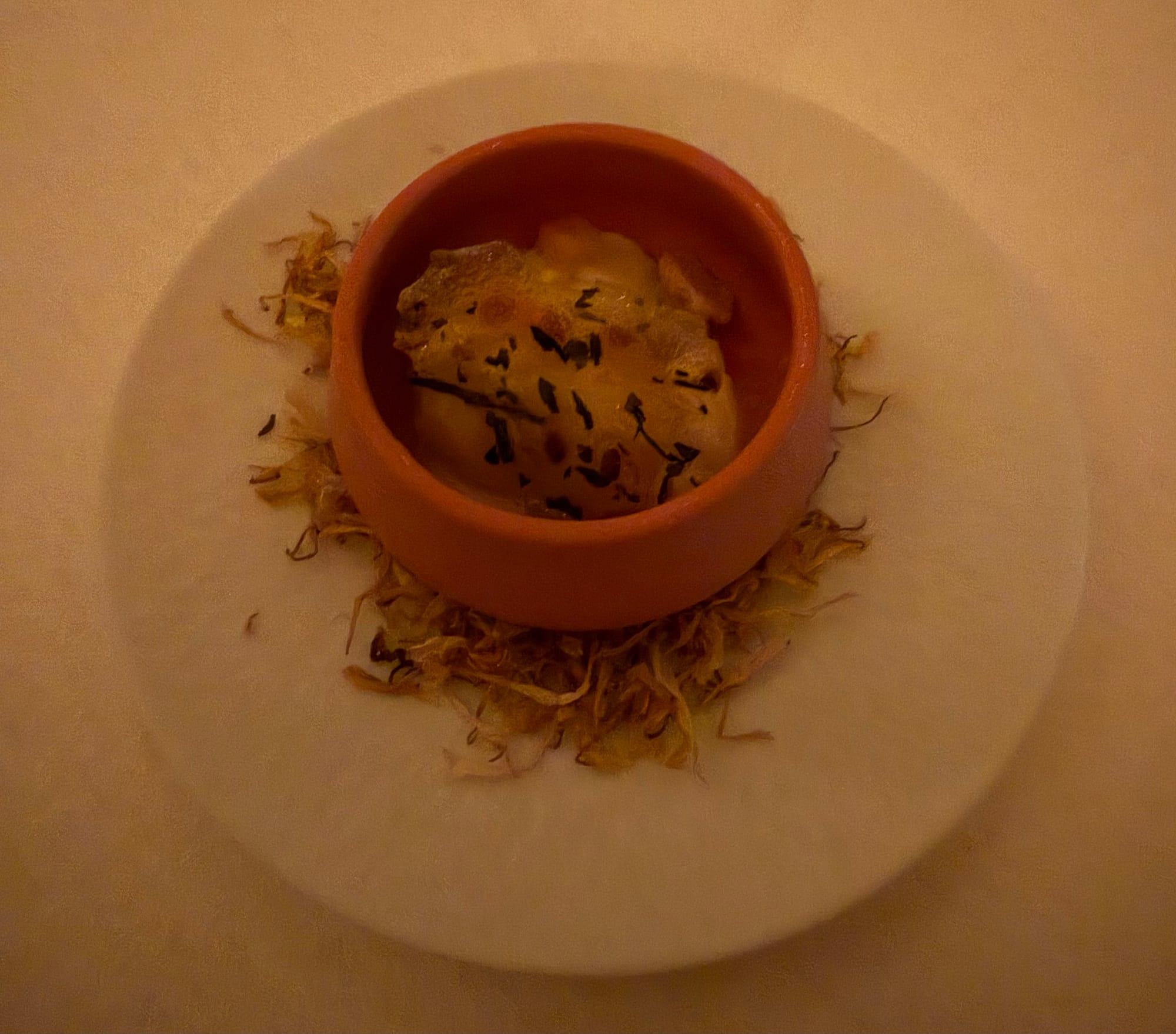
Moving on, we come to another reinterpretation of a Portuguese stew, this time in the form of the Rabbit Cozido. That word means "cooked" or "boiled", as this comfort food is generally prepared slowly over low heat, with a wide variety of regional ingredients marrying over the course of hours. Here the centerpiece was a circular rabbit sausage, lean yet tasty, with Carolina gold rice, as well as braised buckeye beans (creamy Montana legumes apparently also known as "yellow Indian woman" beans???), foie gras-roasted rutabaga, sea fennel, and a rich and savory rabbit brodo bone broth. Predictably, this was excellent, as even a humble soup burst forth with so many harmonious flavors and textures. My bad about the photos, as the lighting led to poor-quality images that didn't at all do the gorgeous presentations justice, but this one was the most atrocious of all, to the point where I almost didn't include it. Next time I'm hiring a professional photographer to come with me, ring light and all, to get you all the pictures you deserve. (If you want to see what everything actually looked like, please visit their Instagram page for beautiful images).
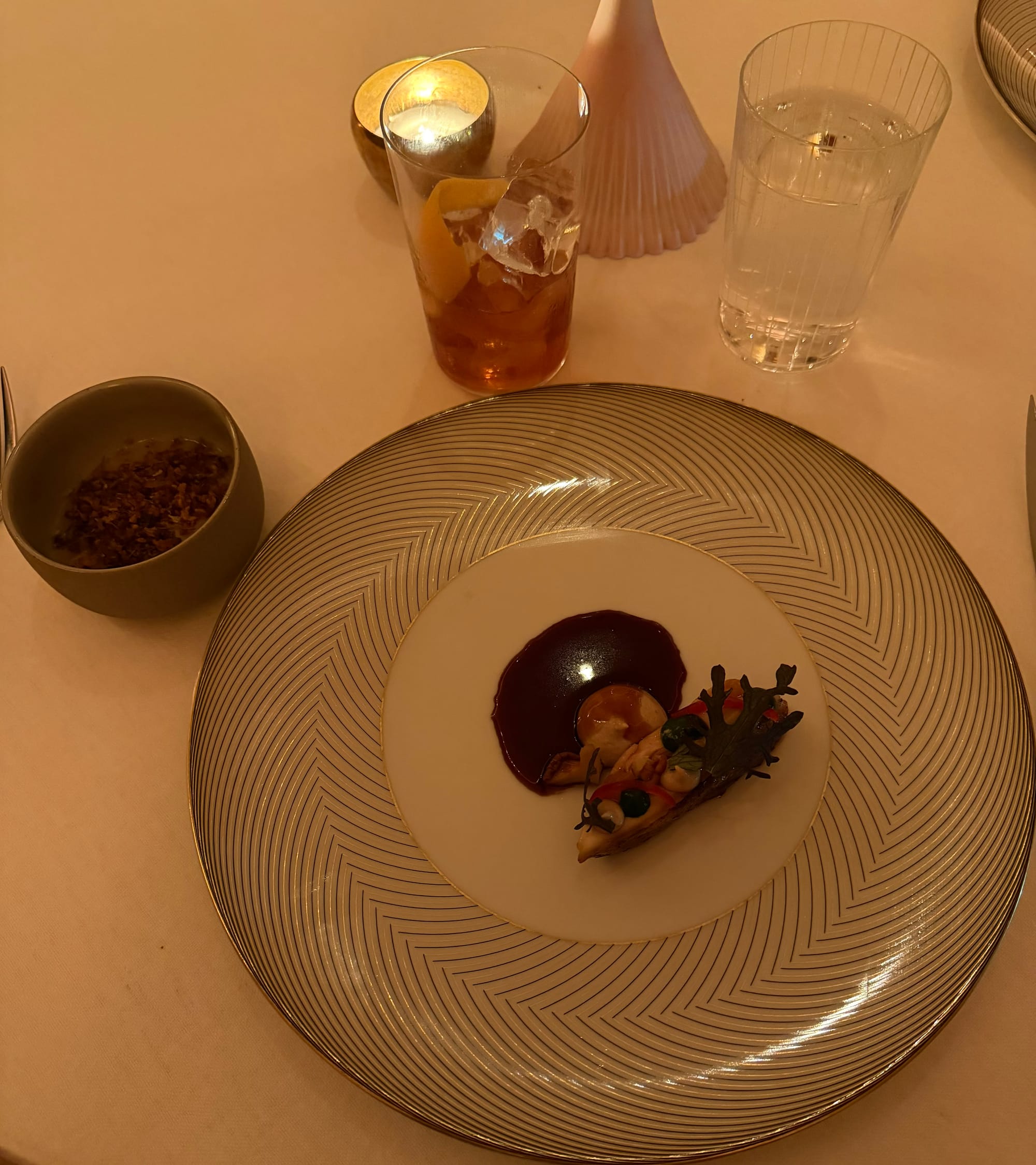
Canja De Galinha ("chicken congee") was a refined take on yet another rustic soup from the land of Vasco da Gama and José Mourinho. Here, we had guinea fowl two ways. The cured breast was offered with chanterelle cream (yeah, I even dug the mushroom component) and a super-flavorful jus poured over the top, complemented with spiced citrus marmalade and bee pollen to cut through the richness. On the side, representing the rice porridge component, was an aromatic risotto with the second part of the bird, shreds of braised leg with crispy shallots for crunch. This isn't the first time I've written these words, but the saucier needs a raise. Course after course, the liquid/semi-solid components were stone-cold bangers, elevating already outstanding dishes.
Matched with those two was Amargo, a libation with mezcal, Amaro Pasubio (an Italian wine-based amaro made with smoked Dolomitan blueberries), and vermouth. This was one of the best drinks of the evening, with the smoky traces of the agave spirit balanced with the fruity and sweet notes from its companions. Those profiles also helped mellow out the robust, succulent flavors of the meat and poultry-centric dishes that it adjoined. At first I was a tad miffed to learn that not every course had its own cocktail, but by this point I was somewhat relieved to have those additional minutes as a reprieve from the fast and furious pace that was required to finish them all, as I was obviously not wasting a drop of that precious nectar.
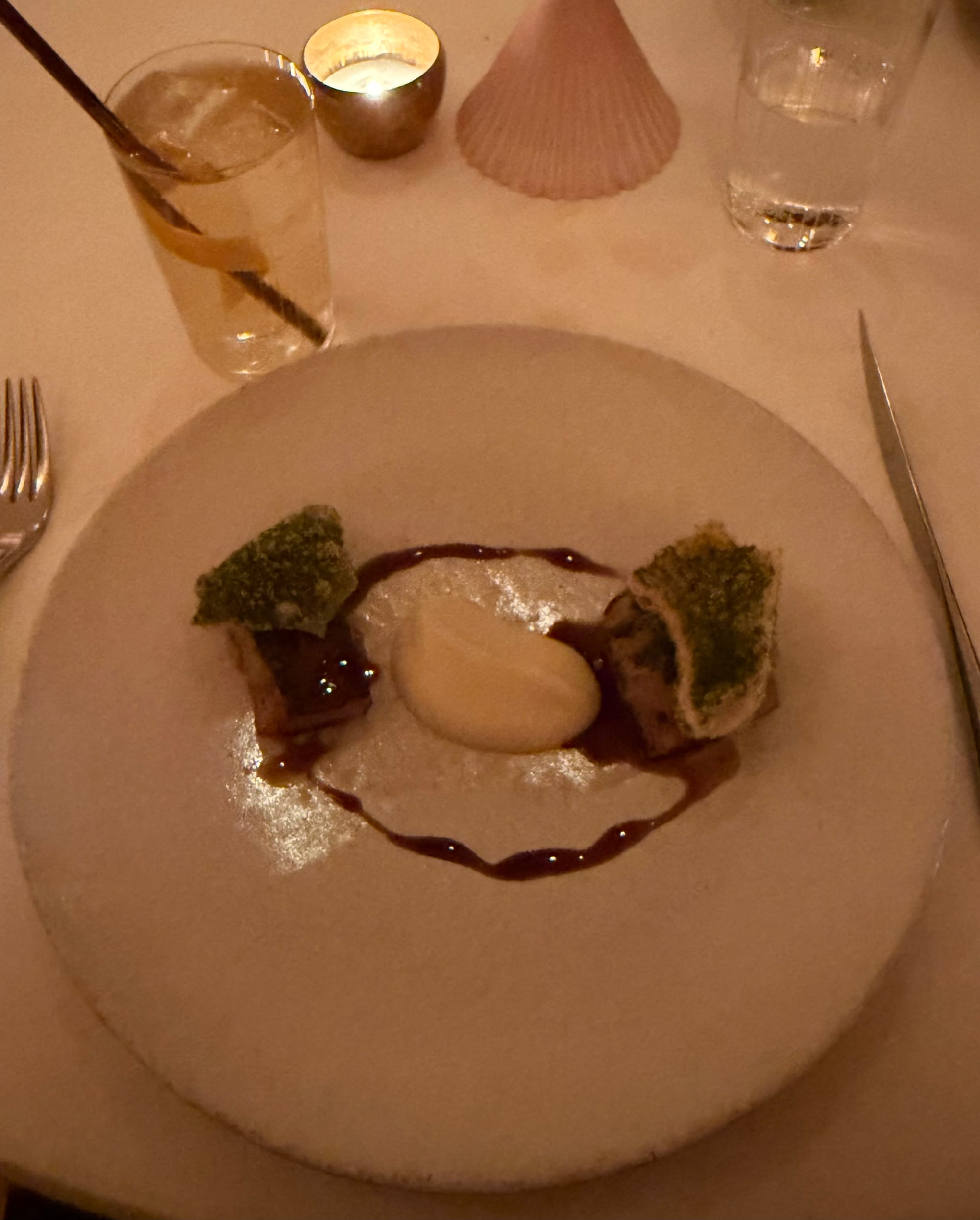
The final savory item was Leitão À Bairrada, an iconic celebratory suckling pig dish from the town of Mealhada in west-central Portugal that is often enjoyed on holidays and special occasions. One preparation of pork of course was not enough, so there was roasted porcelet loin with molho cru, essentially a Portuguese chimichurri, and braised jowl with, you guessed it, another jus overflowing with deeply savory aroma. Both specimens were cooked perfectly, as everything is here, and topped with a crispy chicharrón encrusted in parsley and vinegar powder. In between the two sat a creamy parsley root puree, and Seville orange added a pop of acidity. With that came the Haibõru, a Japanese-style highball with Suntory Toki whisky, apple brandy, and osmanthus. Not too much to say here, as is often the case with this style of potable, but it was among the most spirit-forward of the bunch.
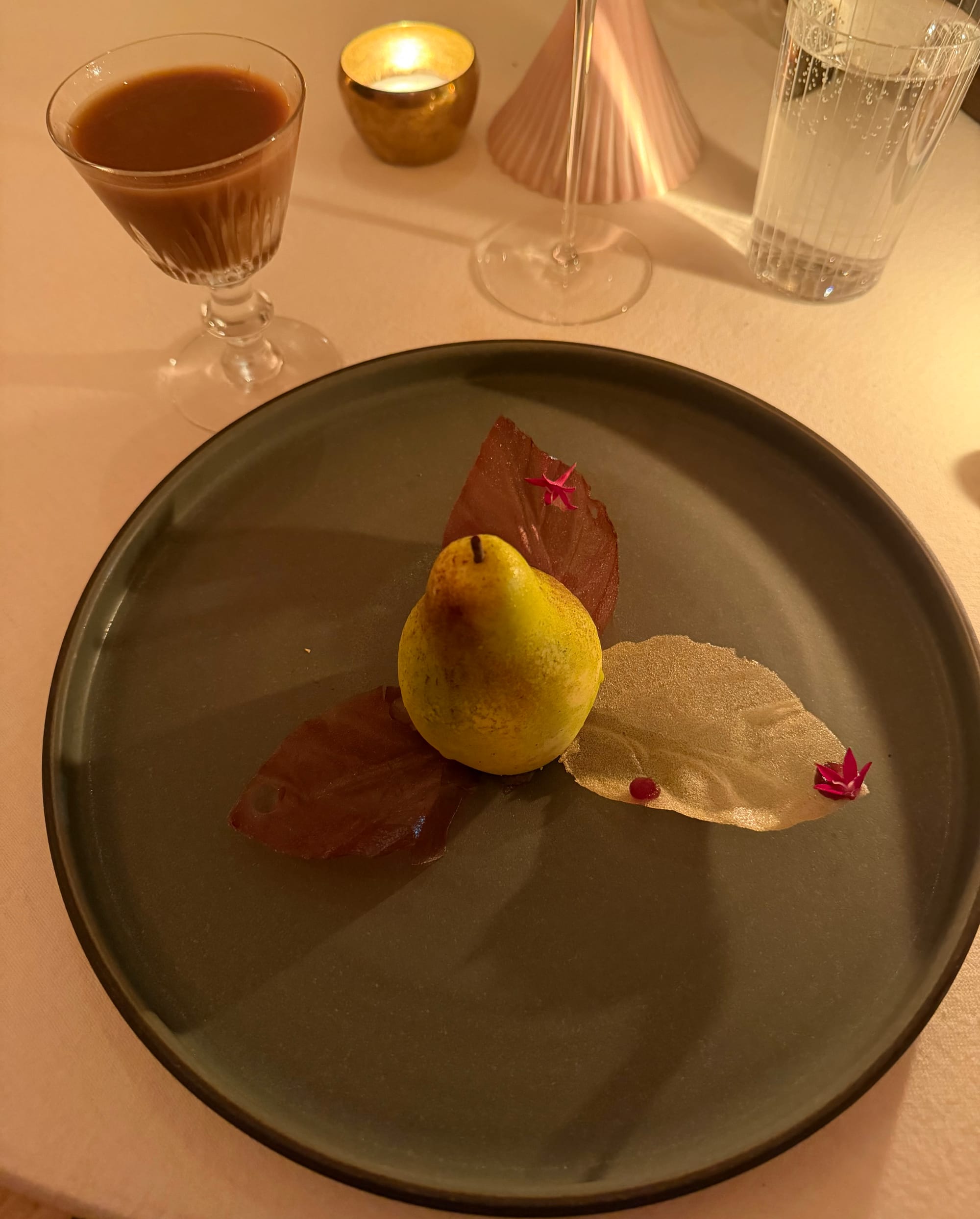
Outside of my all-time favorite footballer Nani, Portugal is probably best known for its production of port, centering around the Douro Valley near Porto in the north of the country. A classic dessert there is Pêras Bébadas, aka drunken pears, which consists of the fruit soaked in fortified wine. March's adaptation features a magnificent, trompe l'oeil pear (reminiscent of the tomato at MAD) made from spiced pear mousse in the shape of the fruit surrounding Bolo Podre, a honey and olive oil spiced cake. The faux pear was nestled amongst white and ruby port "leaves", dotted with port gels and flowers. As fruitily satisfying as it was eye-catching, this was the chefs at the pinnacle of their creativity. An incredible finale to an incredible dinner.
They saved the best cocktail for last as well, as the Chá De Laite kicked ass. Best described as a spiked chai banana milk tea rum, this showcased the warming spices from my favorite coffeehouse order, alongside the sweetness of my second favorite fruit and aged Diplomático rum. Glimmers of earthy and woody carob and black cardamom added depth to this exceptional dessert beverage, one that I would readily order again if available. I imagine it would taste even better in a few months when the weather finally cools down.
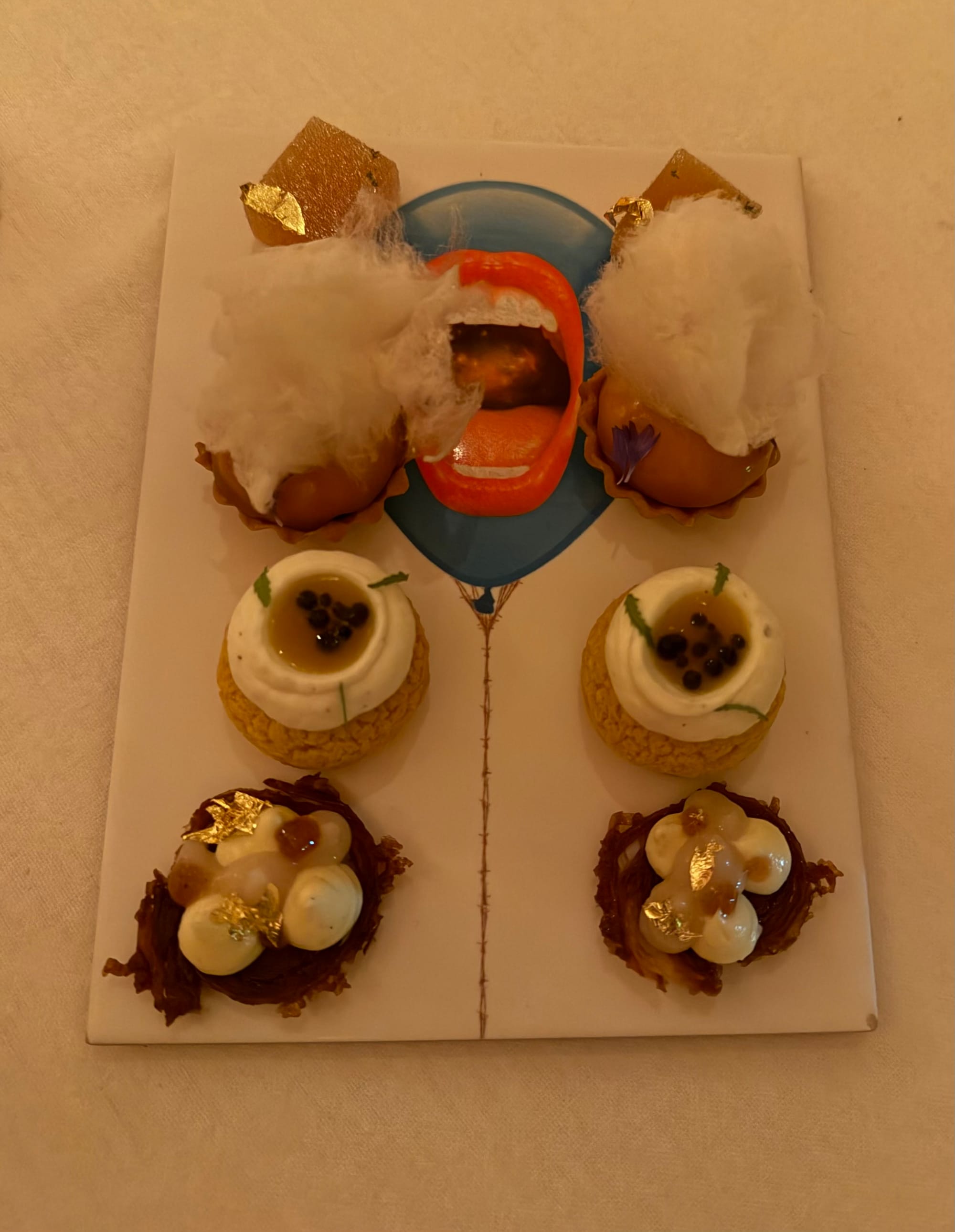
For time's sake, I'm not going to get into each of the concluding Mignardises, but this selection of sweet treats inspired by Portuguese cuisine came on a fun pop art-esque plate with an open-mouth ballon that I would be negligent not to point out (that's at least one thing you can actually make out in the photos below).
And that was it. With full bellies and delicious memories, slightly dizzied from the cocktail procession, we were sent on our way. Of course there was a gift bag containing some bon bons, one of Doug Verrick's fingers, a copy of The Menu from that night, etc.. When I think back on it, what really stands out the most is the incredible creativity: getting from the rustic, traditional Portuguese dishes to these ultra-elevated plates takes genius-level cheffing. March is unquestionably the best restaurant in Houston, the best restaurant in Texas, and quite possibly the best restaurant in the southern United States, though New Orleans might have one or two spots that could put up an argument. We are beyond lucky to have it here, and hopefully they'll have to add a second star to the sign shown in the banner at the top of this page when the 2026 edition of the Texas Michelin guide is released next week.
P.S. Apologies to Joel Pereira.
RANKING UPDATE: Officially, this is a no-brainer to retain its spots on the Essential 33 and #1 ranking on the Best Mediterranean/Middle Eastern list of my Houston Restaurant Guide. Unofficially, it has claimed the throne of my favorite overall restaurant in Houston from Neo (which is actually reopening soon! so we'll see if it can fight back), a hierarchy that I might actually get around to publishing one day.
NEXT UP: A fancy bar and a chill bar are my next two reviews, I just haven't decided yet which one will come first.